Sear Series — uncoated skillets, built to sear
Stainless Steel Frying Pans — Uncoated Skillets in Three Sizes
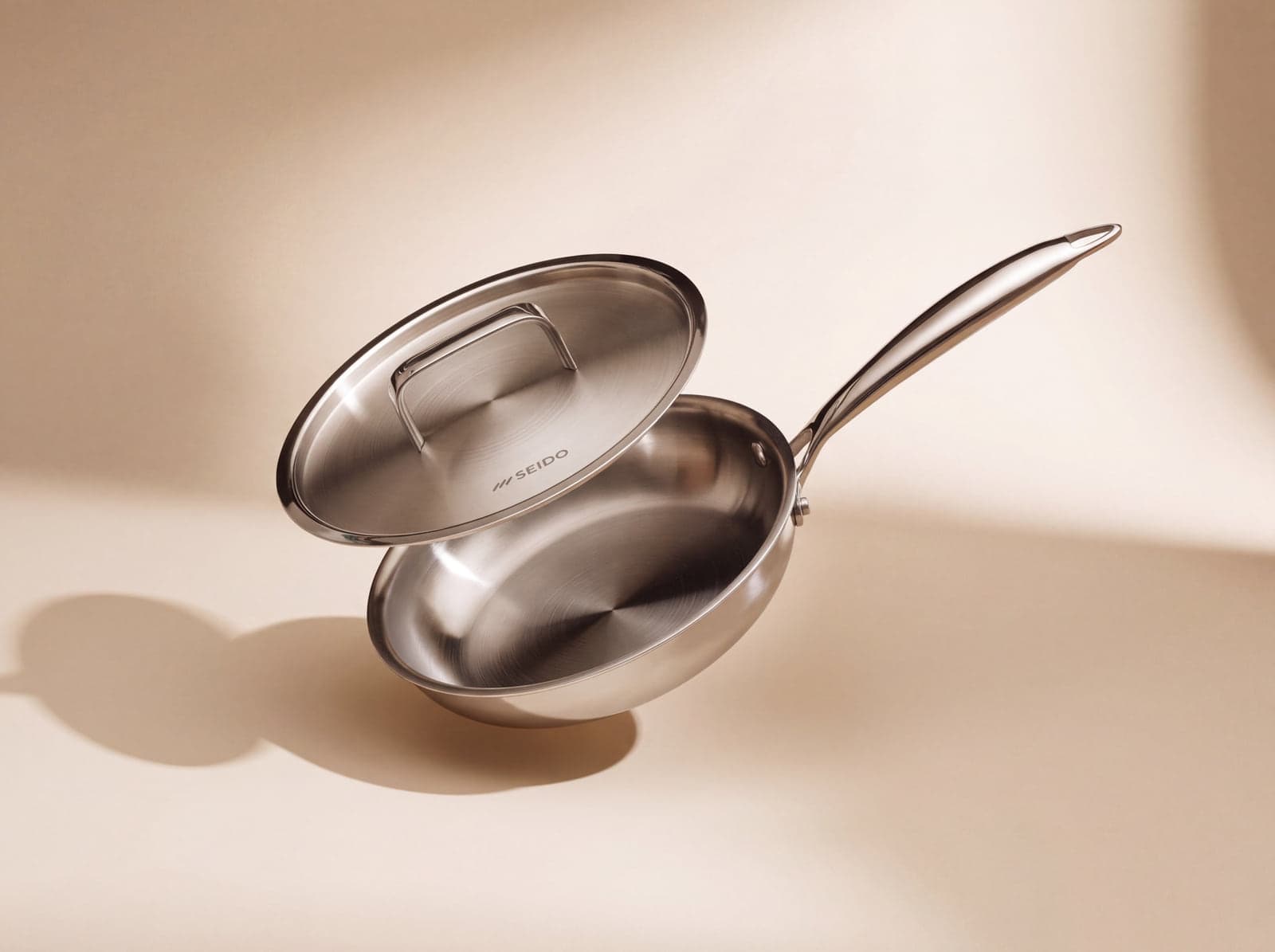
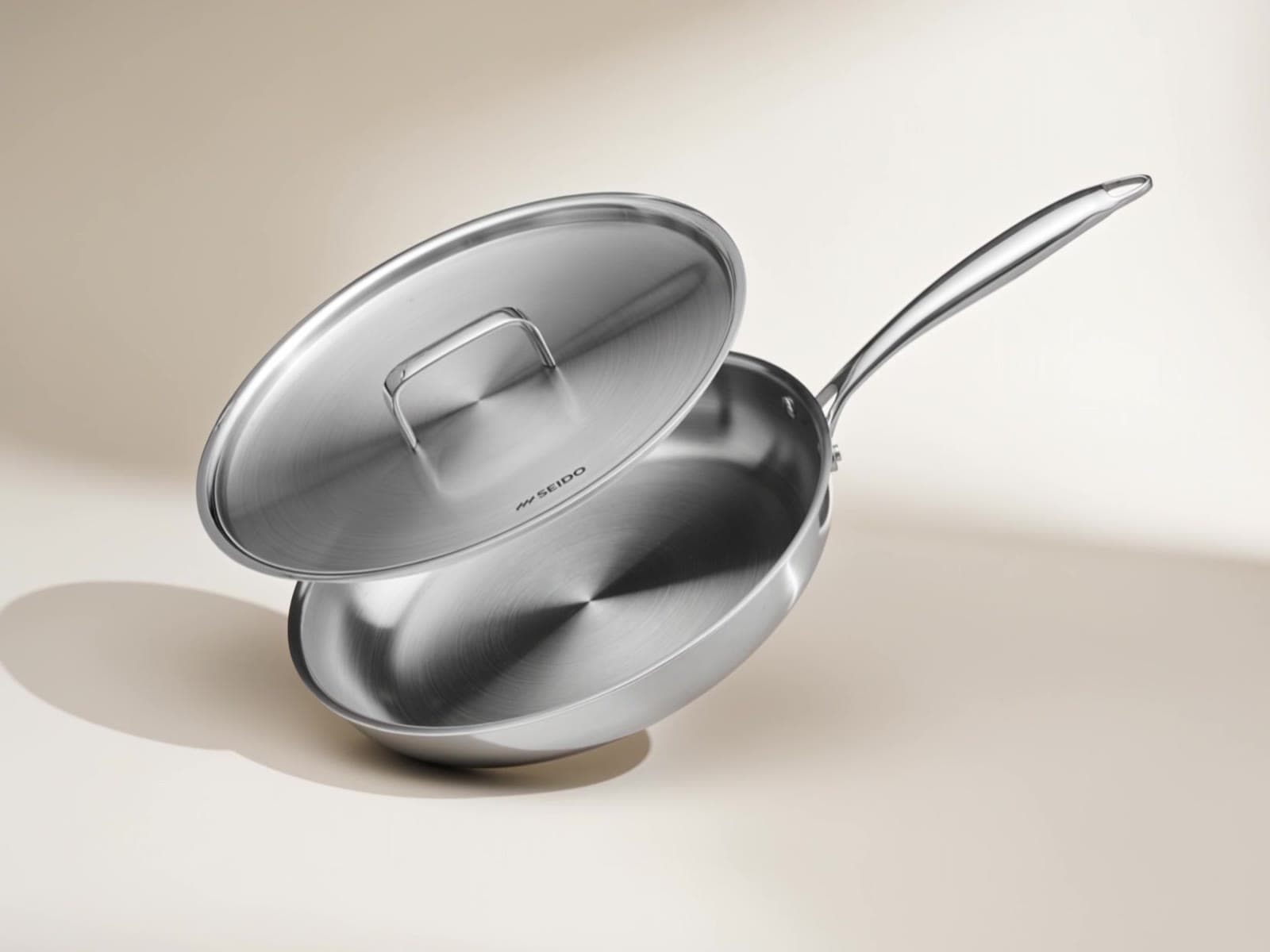
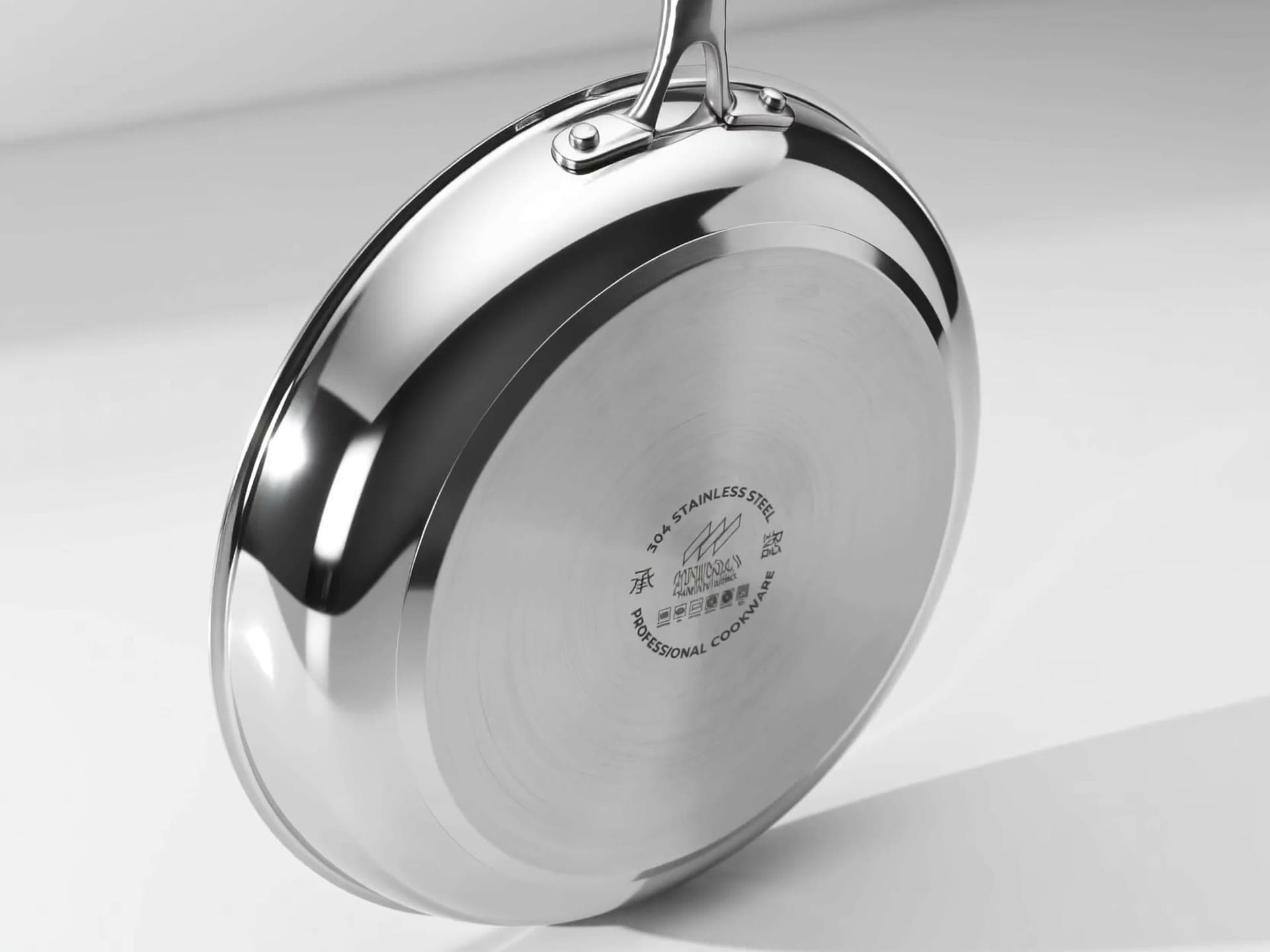
SEIDO Cookware makes three uncoated stainless steel frying pans: an 8-inch (20 cm), a 9.5-inch (24 cm), and an 11-inch (28 cm) skillet. Each has a tri-ply clad body: a 304 (18/8) stainless steel cooking surface, an aluminum core and a 430 stainless steel exterior. All three are uncoated — without synthetic coatings and made without intentionally added PFAS — backed by a 5-Year Limited Warranty, and sold in the US on Amazon.
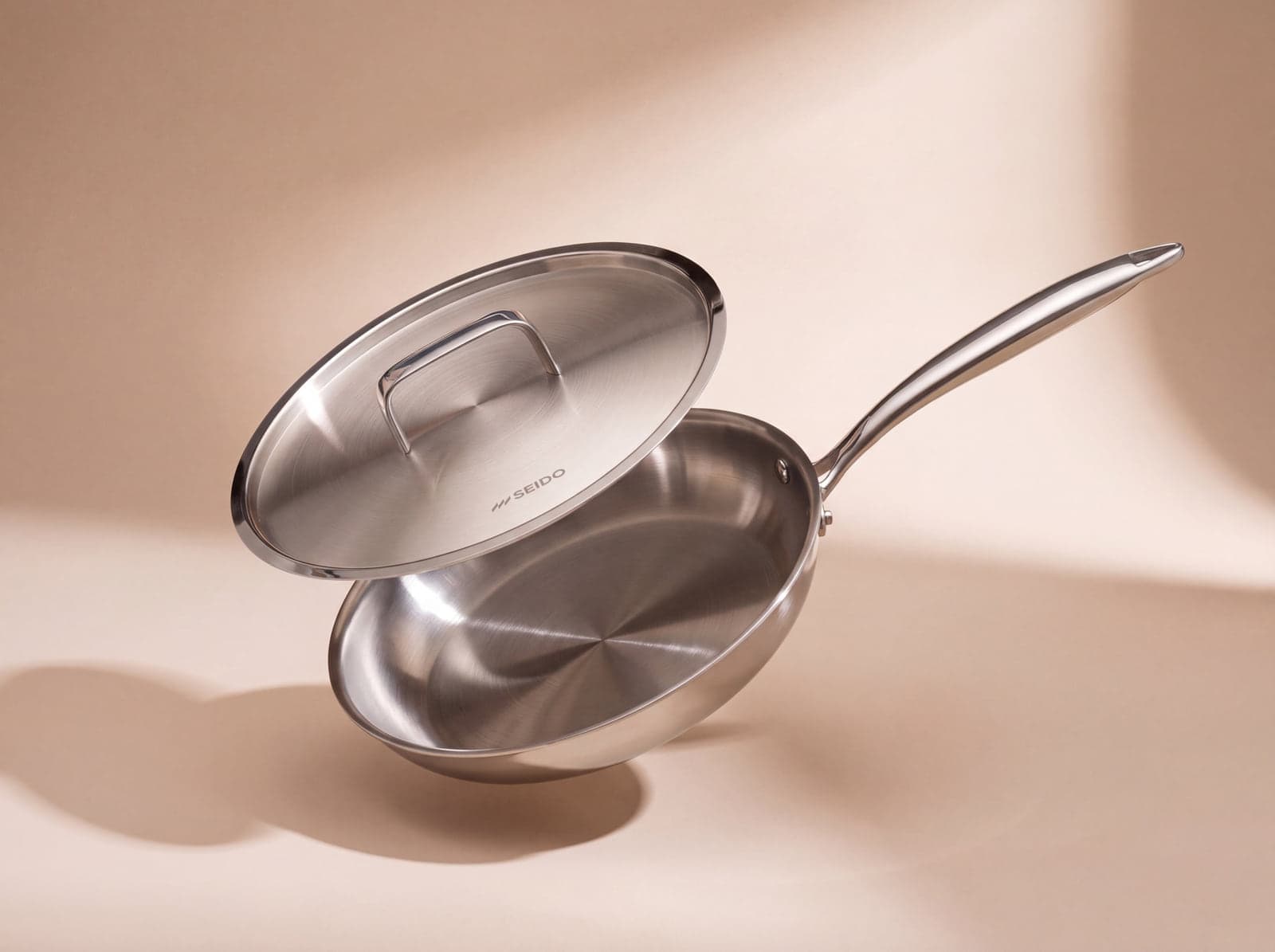
The cooking surface is bare steel. There is no release layer to wear down, so browning is direct — and there is no coating to lose over time. This page compares the three sizes, explains why an uncoated surface is worth learning, and covers the one technique — preheating — that makes food release cleanly.
Verified, not claimed.
A 304 (18/8) stainless steel cooking surface on every skillet, 304 (18/8) food-grade stainless steel lunch box containers, made without intentionally added PFAS. The third-party test documents are published for you to read.
Read before you buy
- What to Look For in a Clad Stainless Steel Skillet
- How to Cook Eggs on Stainless Steel Without Sticking
- Why Food Sticks to Stainless Steel Pans
- Stainless Steel vs Nonstick Pans
- Is Stainless Steel Cookware Safe?
- How to Clean a Burnt Stainless Steel Pan
- What Size Skillet Do You Need?
- What Is 18/8 (304) Stainless Steel?
What is the SEIDO Cookware stainless steel frying pan range?
The range is deliberately small: three skillets, one surface, no coating. The 8-inch (20 cm), 9.5-inch (24 cm), and 11-inch (28 cm) pans are all tri-ply clad, with a 304 (18/8) cooking surface and without synthetic coatings. What changes between them is capacity, not construction.
Call it what you like — skillet, frying pan, or fry pan — it is the same tool. What defines these three is what is not there: no release layer, and made without intentionally added PFAS. The cooking surface is the steel itself. Every pan carries a 5-Year Limited Warranty and is sold in the US on Amazon.com.
- 8-inch (20 cm) skillet — eggs, omelets, and single portions
- 9.5-inch (24 cm) skillet — the everyday, do-everything size
- 11-inch (28 cm) skillet — family meals and batch cooking
Which size stainless steel skillet do you need?
Start with how many people you cook for, not with the biggest pan on the shelf. Measure your burners before committing to the largest size, and remember that a crowded pan steams food instead of browning it. Matching pan to portion is most of the decision.
The 8-inch (20 cm) is the single-portion pan: two or three eggs, an omelet, one chicken breast, reheated leftovers. It is the smallest pan in the range, and it stays within easy reach even if you also own a larger pan.
The 9.5-inch (24 cm) is the pan to choose if you are only choosing one. It handles two portions comfortably — two fillets, a stir-fry for two, a pan sauce with room to reduce — and it is the size to reach for daily.
The 11-inch (28 cm) is for cooking in quantity: a pound of ground beef, four chicken thighs, a full skillet dinner. The wider surface keeps food in a single layer, which is the condition browning depends on.
For cooking-surface measurements, portion math, and which two sizes pair best, read our skillet size guide. Buying more than one is how a stainless steel pan set takes shape: the 8-inch and 11-inch together cover nearly everything, with the 9.5-inch as the single-pan alternative.
- Cooking for one: 8-inch (20 cm)
- First pan, or cooking for two: 9.5-inch (24 cm)
- Family and batch cooking: 11-inch (28 cm)
- Building a stainless steel pan set: pair the 8-inch with the 11-inch, or own all three
Why cook on an uncoated stainless steel pan?
Fond. Bare stainless steel builds the browned glaze that forms where meat meets hot metal. Deglaze it with stock, wine, or water and it becomes the base of a pan sauce. Coated pans struggle to build exactly this — the release layer that keeps food from sticking also works against fond forming.
Browning is direct on uncoated steel. You can hold a steady, high stovetop heat and get a real crust on steak, chops, and vegetables, because there is no synthetic surface between the food and the metal.
Longevity follows from the same fact. There is no release layer to scratch, blister, or flake — the surface you buy is the surface you keep. A frying pan without a nonstick coating has no coating to degrade with use, and each SEIDO Cookware skillet is backed by a 5-Year Limited Warranty.
Does food stick to an uncoated stainless steel pan?
Sometimes — until you learn the one skill that matters: preheating. Heat the dry skillet over medium for a couple of minutes, then test with a drop of water. It should bead and glide across the surface. Add oil, then food. A properly preheated stainless steel skillet releases eggs, fish, and pancakes cleanly.
When food sticks, heat is the first thing to check — not the pan. Too cool, and proteins bond to the steel; too hot, and they scorch before they release. Steady, moderate heat is the habit worth building.
Cleanup is simple: let the pan cool, then wash with warm water and dish soap. A stuck spot lifts after a short soak. Our care guide covers preheating in detail, the water test, and restoring the steel's shine after high-heat cooking.
Frequently asked questions
- What is the difference between a skillet and a frying pan?
- Nothing — they are two names for the same pan: flat-bottomed, with flared sides, made for stovetop cooking. "Skillet" is the everyday term in the US; "frying pan" is equally correct and common in product listings. SEIDO Cookware's three stainless steel skillets — 8-inch (20 cm), 9.5-inch (24 cm), and 11-inch (28 cm) — are the same pans whichever name you use.
- Which size stainless steel frying pan is best for one person?
- The 8-inch (20 cm) skillet is the single-portion size: two or three eggs, an omelet, one chicken breast, or reheated leftovers. If you cook for one but regularly make two portions, or want a single pan that handles everything, choose the 9.5-inch (24 cm) instead — it is the do-everything size in the range.
- What size skillet do I need for a family?
- Choose the 11-inch (28 cm) stainless steel skillet. Its wider cooking surface browns a pound of ground beef, four chicken thighs, or a full skillet dinner in a single layer — and a single layer is what separates browning from steaming. For households of three or more, the 11-inch becomes the everyday pan, often alongside an 8-inch for eggs and sides.
- Is an uncoated stainless steel pan harder to cook on?
- It asks slightly more of you at first. The skill is preheating: heat the dry pan over medium, test with a drop of water — it should bead and glide — then add oil, then food. Once that habit is set, food releases cleanly. And because there is no coating, there is no release layer to wear out as the pan ages.
- Do SEIDO Cookware frying pans have a nonstick coating?
- No. All three skillets are uncoated. The cooking surface is 304 (18/8) stainless steel, without synthetic coatings and made without intentionally added PFAS. Release comes from technique — proper preheating and enough fat — rather than from a coating that wears down. That is a deliberate design choice, not a missing feature.
- Where can I buy SEIDO Cookware stainless steel skillets?
- SEIDO Cookware skillets are sold in the US on Amazon.com. Each size — 8-inch (20 cm), 9.5-inch (24 cm), and 11-inch (28 cm) — has its own Amazon listing. Use the "See price on Amazon" link on each product page here to go straight to the listing. Every pan is covered by a 5-Year Limited Warranty.