Stainless Steel vs Carbon Steel Skillets: Two Honest Tools
Published September 17, 2026
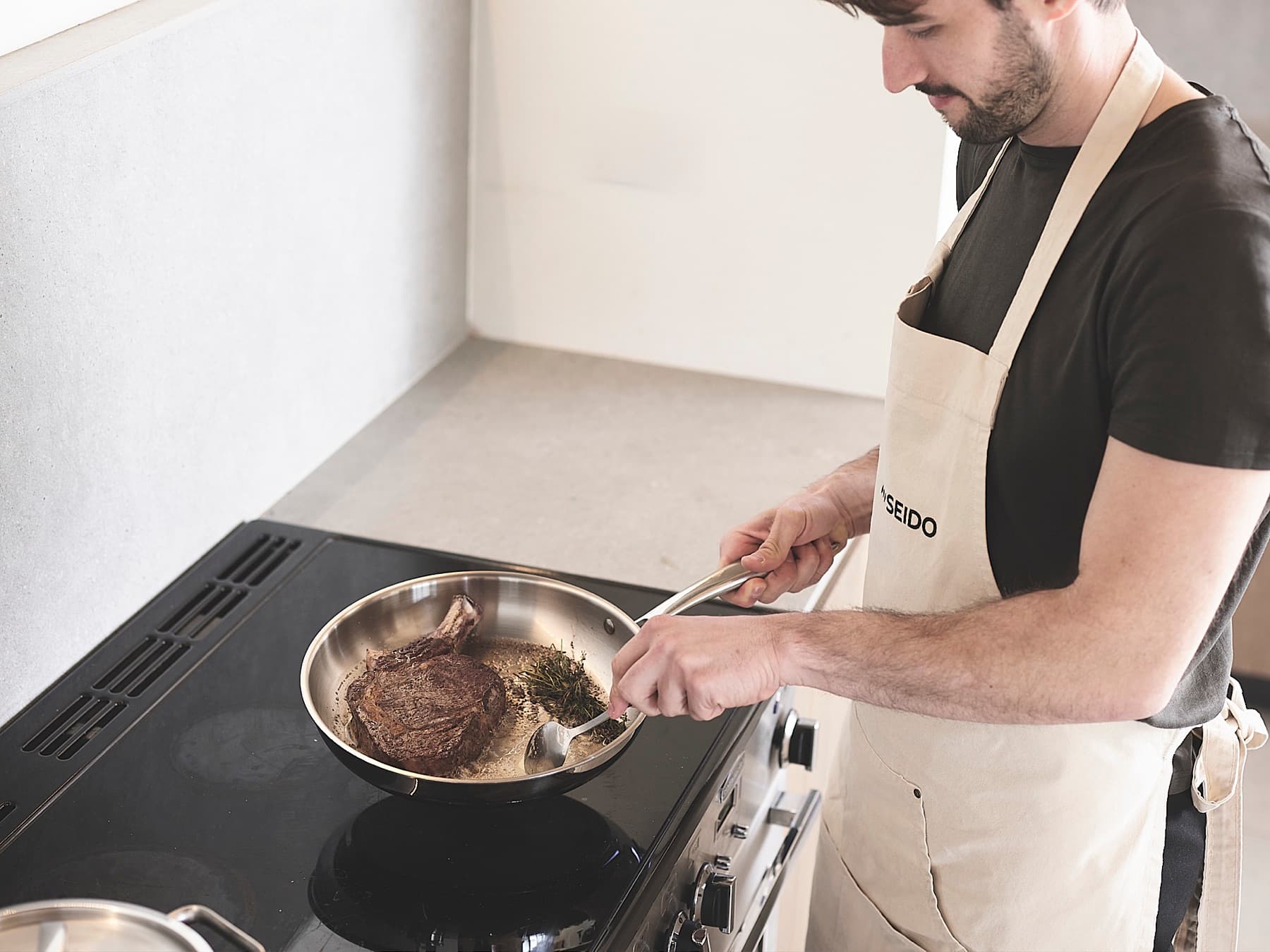
Carbon steel is iron with a little carbon and no protective alloying, so it depends on seasoning: a baked-on oil layer that gives it release and protects it from rust. Stainless steel needs no seasoning. It resists rust on its own and stays neutral with acidic food. Carbon steel rewards upkeep with slick eggs. Stainless rewards technique with fond and easy care.
What is the difference between stainless steel and carbon steel?
Both are steel, which means both are mostly iron with a small amount of carbon. The difference is what else is in the alloy. Carbon steel cookware is close to plain iron and carbon, with very little else added. Stainless steel must contain at least 10.5% chromium by definition, and common food-grade grades such as 304 (18/8) carry roughly 18% chromium and 8% nickel.
That chromium is the whole story. It reacts with oxygen to form an extremely thin, invisible chromium oxide film across the surface. The film is stable, and if it is scratched it re-forms on its own in air. It is why stainless steel stays bright and resists rust without any help from the cook.
Carbon steel has no such film. Its bare surface is reactive iron, so it needs a protective layer supplied from outside: seasoning.
Does a carbon steel pan need seasoning, and does stainless steel?
A carbon steel pan needs seasoning to work well. Seasoning is a thin layer of oil heated past its smoke point until it polymerizes, turning from a liquid into a hard, slick, dark coating bonded to the iron. Some carbon steel pans arrive with a protective wax or oil that has to be removed; others come pre-seasoned. Either way, seasoning is built up on the stovetop or in the oven with several very thin coats of a neutral oil.
That layer grows with use. Each time you cook with fat, a little more polymerizes, and the pan becomes more slippery over months. It can also be damaged: long soaks, harsh scrubbing and acidic food wear it back, and it then needs a touch-up.
Stainless steel does not need seasoning. It can take a temporary layer of polymerized oil, but that layer scrubs off with normal washing, so it is not relied on for release. Release on stainless comes from technique instead: preheat the dry pan until a drop of water beads and glides, add fat, let it shimmer, then add dry food and let it release on its own.
Can you cook acidic foods like tomatoes in carbon steel?
Briefly, yes. For long, it is best avoided. Acids such as tomato, wine, vinegar and citrus attack both the seasoning and the iron beneath it. A quick deglaze is usually fine on a well-seasoned pan. A slow tomato sauce or a wine braise can strip seasoning, leave bare gray patches and give the food a metallic taste.
Stainless steel is largely non-reactive with everyday cooking acids thanks to that chromium oxide film. You can simmer a tomato sauce for an hour, reduce wine for a pan sauce or finish with lemon juice, and the pan will not give the food a metallic taste or discolor it the way bare iron can.
- Carbon steel: short contact with acid is fine; long simmers strip seasoning.
- Stainless steel: tomato sauces, wine reductions and citrus finishes all work.
- Carbon steel changes color as it seasons, from silver-gray to brown to black. That darkening is normal.
- Stainless steel can show a faint rainbow or golden heat tint after high heat. It is cosmetic, and a splash of white vinegar usually lifts it.
Which heats faster: carbon steel or stainless steel?
Carbon steel skillets are usually a single piece of fairly thin iron-based metal. They come up to temperature quickly and respond fast when you turn the burner up or down. Because iron is only a moderate conductor and the metal is thin, a carbon steel pan can run hotter over the flame than at the edges, especially when the pan is larger than the burner.
Stainless steel on its own is a relatively poor conductor of heat. That is why many stainless steel skillets pair a stainless cooking surface with a more conductive metal, such as aluminum or copper, in the base or through the body to spread heat more evenly. How a given stainless skillet responds depends on how it is built.
In daily use, both reward a proper preheat over medium heat. Carbon steel is quick to heat and quick to overshoot. A thicker stainless skillet takes a little longer and tends to hold steady once it is there.
Weight is a separate question. Carbon steel skillets are much lighter than cast iron of the same size, but against stainless steel, thickness, handle design and anything added to the base change the weight far more than the choice of steel does.
Does carbon steel rust, and does stainless steel?
Carbon steel rusts readily if its seasoning is thin or damaged and the pan is left wet. A pan air-drying in a rack overnight can show orange spots by morning. Rust is fixable: scrub the spot back to bare metal, dry the pan over heat and re-season. Still, it is the maintenance habit carbon steel asks of you every day.
Stainless steel is rust-resistant rather than rust-proof. Under normal kitchen use, its chromium oxide film keeps corrosion away, so a stainless skillet can be washed, towel-dried and put away without further steps. Salt left sitting on the surface or long soaks in harsh cleaners can cause small pits over time, so rinse promptly and dry.
How do you clean carbon steel vs stainless steel?
Care is where the two pans feel most different day to day.
- Carbon steel: rinse with hot water and a brush, use a little dish soap if needed, avoid soaking, dry immediately over low heat and wipe on a very thin film of oil.
- Carbon steel: never put it in the dishwasher; the detergent and long wet cycle strip seasoning and invite rust.
- Stainless steel: wash with hot soapy water and a sponge; stuck-on food lifts after a short soak or a simmer of water in the pan.
- Stainless steel: a nonscratch scourer or a paste of baking soda handles browned residue, and vinegar lifts heat tint.
- Both: let a hot pan cool before it meets cold water, which reduces the risk of warping.
Which should you choose: carbon steel or stainless steel?
Choose by what you cook most and how much upkeep you enjoy.
- Carbon steel suits high-heat searing, stir-frying, crepes and cooks who like building and maintaining seasoning over time.
- Stainless steel suits pan sauces and fond, tomato and wine dishes, braises started on the stove, and cooks who want to wash, dry and put the pan away.
- Eggs are easier on a well-seasoned carbon steel pan; on stainless they need a proper preheat and enough fat, and then they usually release cleanly.
- If you cook widely, owning one of each is common: carbon steel for the fastest, hottest jobs and stainless steel for everything acidic or sauce-based.
Where do SEIDO skillets fit?
SEIDO makes the stainless side of this comparison. Each skillet has a 304 (18/8) stainless steel cooking surface, uncoated, so there is no seasoning to build or maintain. The 9.5 in (24 cm) skillet comes with a lid. SEIDO skillets are oven-safe with the lid off, and each is backed by a 5-Year Limited Warranty.
Cooking this way is what our 9.5-inch stainless steel skillet is built for — 9.5 in (24 cm), tri-ply clad, oven-safe, 5-year limited warranty.
Frequently asked questions
- Is carbon steel better than stainless steel?
- Neither is better overall. Carbon steel is quick to heat and becomes very slick once well seasoned, but it rusts if left wet and reacts with acidic food. Stainless steel needs no seasoning, resists rust and stays neutral with tomatoes, wine and citrus, but it relies on preheating and fat for release.
- How do you season a carbon steel pan?
- Remove any factory wax or oil with hot soapy water, then dry the pan over heat. Wipe on a very thin coat of neutral oil, buff off the excess, and heat the pan past the oil's smoke point until it stops smoking. Repeat three or four times. Cooking with fat builds the layer further.
- Can you season a stainless steel pan?
- Only temporarily. Stainless steel can take a thin layer of polymerized oil, but it scrubs off with normal washing, so it is not relied on for release. Reliable release on stainless comes from preheating until water beads, adding fat, and letting food release on its own.
- Why is my carbon steel pan turning black?
- That is seasoning. As oil polymerizes on the iron with each use, the surface darkens from silver-gray to brown and eventually black. Patchy color is normal in the early months. Flaking or sticky patches usually mean too much oil was applied at once; scrub those areas back and re-season with thinner coats.
- Does carbon steel work on induction?
- Yes. Carbon steel is iron-based and magnetic, so it works on induction cooktops.
- Can stainless steel and carbon steel go in the dishwasher?
- Carbon steel should never go in the dishwasher, because the detergent and long wet cycle strip seasoning and cause rust. For a stainless steel skillet, follow the maker's care instructions; handwashing with hot soapy water and drying promptly works for either pan.
Browse all stainless steel frying pans or keep reading: How to Cook Eggs on Stainless Steel Without Sticking · Why Food Sticks to Stainless Steel Pans · Stainless Steel vs Nonstick Pans.