How to Cook Eggs on Stainless Steel Without Sticking
Published July 31, 2026 · Updated September 17, 2026
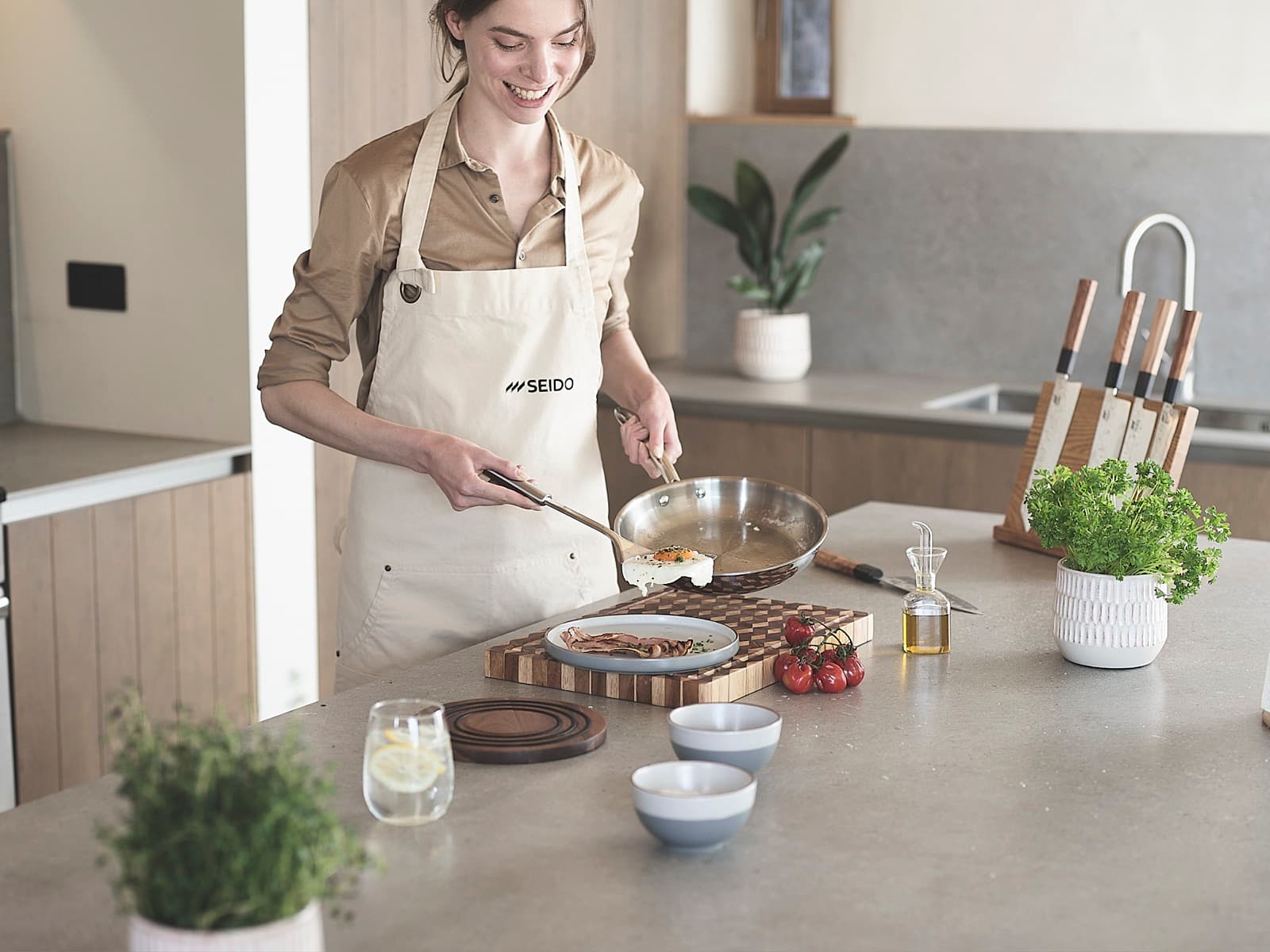
Eggs won't stick to stainless steel when two things are right: the pan's properly preheated before the fat goes in, and there's enough fat to keep the egg proteins off the bare metal. Confirm the preheat with the water-drop test, add butter or oil, lower the heat to medium, and let the eggs set before you move them.
Sticking is chemistry, not a flaw in your pan. Egg proteins bond to bare metal on contact. A preheated surface plus a layer of hot fat keeps the proteins from ever touching the steel — and once the egg cooks through and sets, it contracts and lets go on its own.
Why do eggs stick to stainless steel?
Let's start with why this happens — we've ruined more eggs than we'd like to admit learning it. Egg whites are mostly water and protein, and those proteins bond with bare metal almost the instant they touch it. It's the same surface chemistry that builds flavorful fond under a steak — useful when you're searing, unforgiving with something as delicate as an egg. Stainless steel also looks mirror-smooth but is microscopically textured, and setting proteins settle into that texture and grip.
The fix follows straight from the mechanism. Preheat the pan so the surface behaves differently, and add enough fat that the egg cooks on a layer of hot butter or oil instead of on metal. Get those two things right and the egg sets, contracts, and slides free without a fight.
How do I preheat a stainless steel pan for eggs? The water-drop test
The water-drop test takes the guesswork out of preheating, because stainless steel gives you almost no visual cue that it's ready. Here's how it goes:
- Set the dry, empty skillet over medium heat and give it a few minutes. Dry matters — water left over from washing cools the surface unevenly and spatters under the fat later.
- Flick a few drops of water into the pan. If they flatten, spread, and sizzle away, the pan isn't ready. Keep heating.
- Test again. When a drop pulls together into a single bead that glides around the pan like a ball of mercury, the surface is ready. That's the Leidenfrost effect: the pan is now well past water's boiling point, so the underside of the drop vaporizes instantly and the drop skates on its own cushion of steam.
- Pour off or wipe away the test water, then reduce the heat to medium or a touch below. A Leidenfrost-hot pan is hotter than eggs want — the test verifies the surface, and backing off the heat sets up the cook.
What fat should I use for eggs, and how much?
Butter is the classic choice because it carries flavor and comes with a built-in thermometer: it foams as its water boils off, and when the foam subsides — before the milk solids brown deeply — the pan's at egg temperature. A neutral oil tolerates more heat if you like crisp, lacy edges on a fried egg. Ghee or clarified butter splits the difference: butter flavor with the milk solids already removed.
Use enough to coat the entire floor of the pan with a visible film — about a tablespoon in an 8-inch skillet. That's more than a nonstick pan asks for, and it should be: on uncoated steel, the fat is doing the job a coating would otherwise do. Swirl it so no bare patch is left where an egg white can find metal.
How do I know when the eggs are ready to release?
Patience beats prodding — every time. As egg proteins cook they firm up and contract, pulling the egg away from the surface on their own. For a fried egg, wait until the whites turn opaque and the edges look set, then nudge the pan — a ready egg slides as one piece. If it resists, it's telling you it needs another moment.
Prying at an egg that hasn't released tears proteins that are mid-way through letting go, and the torn layer stays welded to the pan. Give it time, then slide a thin spatula under once the egg already moves freely. The pan tells you when; your job is to listen.
What are the most common mistakes when cooking eggs on stainless steel?
Nearly every stuck egg we've ever seen traces back to one of five errors:
- Starting in a cold pan. Eggs poured onto unheated steel bond directly to the metal — the worst-case scenario for sticking.
- Preheating a wet pan. Leftover rinse water creates cool spots and spits under the fat, leaving bare patches where the whites grab.
- Running the heat too high. Butter scorches — the milk solids burn before the eggs even land — and whites blister, brown hard, and weld at the edges. If the butter smokes on contact, cool the pan, wipe it out, and start again.
- Moving the eggs too soon. Dragging a spatula under an unset egg tears proteins that were in the process of releasing.
- Trusting your eyes instead of the test. Stainless steel gives few visual preheat cues. The water drop is the reliable signal; the clock and the dial are not.
Scrambled, fried, or omelet: does the technique change?
The foundation — water-drop preheat, fat film, moderate heat — stays the same for all three. For scrambled eggs, drop to medium-low after the preheat and keep the curds moving gently; a fine film of cooked-on residue is normal and lifts with a short soak in warm, soapy water. For fried eggs, let the whites set undisturbed, then baste with the pan's fat or flip once the egg slides freely.
For an omelet, an 8-inch skillet is the traditional size. Swirl the beaten eggs to coat the floor, stir gently until soft curds form, then stop stirring and let the base set for a few seconds before folding. Because the surface is uncoated, you can hold the confident medium heat an omelet wants without worrying about wearing anything out.
What is the best pan for eggs?
Size matters more than you might expect. An 8-inch (20 cm) skillet concentrates the fat film and gives a couple of fried eggs or a classic omelet the snug footprint they need — on a wide pan, the same tablespoon of butter spreads thin and leaves gaps.
Our 8-inch skillet is built for exactly this job: uncoated, with a tri-ply clad body — a 304 (18/8) stainless steel cooking surface, an aluminum core and a 430 stainless steel exterior — made without intentionally added PFAS and without synthetic coatings. There's no release layer to scratch or wear away, because the release comes from technique — preheat, fat, patience — and technique doesn't wear out. It's backed by a 5-Year Limited Warranty and sold in the US on Amazon, with 9.5-inch (24 cm) and 11-inch (28 cm) skillets alongside it for bigger batches and family breakfasts.
Cooking this way is what our 8-inch stainless steel skillet is built for — 8 in (20 cm), tri-ply clad, oven-safe, 5-year limited warranty.
Frequently asked questions
- Why do eggs stick to stainless steel?
- Egg proteins form bonds with bare metal the moment they touch it, and they settle into the microscopic texture of the surface as they set. A properly preheated pan with a layer of hot fat keeps the proteins off the metal, and once the egg cooks through, its proteins contract and the egg releases on its own.
- Do I need more fat on stainless steel than on a nonstick pan?
- A little more, yes — about a tablespoon of butter or oil in an 8-inch skillet, enough for a visible film across the whole pan floor. On uncoated steel, the fat does the job a coating would do. But technique matters more than quantity: a well-preheated pan with moderate fat beats a cold pan swimming in oil.
- What heat setting should I use for eggs on stainless steel?
- Preheat over medium and confirm with the water-drop test rather than a dial number — stoves vary too much for a universal setting. When a drop of water beads into a ball and glides across the pan, add your fat and lower the heat to medium or medium-low for the cook. Eggs want moderate, steady heat, not searing heat.
- Why did my eggs stick even though I preheated the pan?
- Check four things: the pan was truly dry before preheating, the water drop actually beaded and glided rather than just sizzling, the fat had a few seconds to heat before the eggs went in, and you waited for the eggs to set before moving them. A scorched fat layer from too-high heat is the other frequent cause — if the butter burned, the surface was too hot.
Browse all stainless steel frying pans or keep reading: Why Food Sticks to Stainless Steel Pans · Stainless Steel vs Nonstick Pans · Is Stainless Steel Cookware Safe?.