Stainless Steel vs Glass Meal Prep Containers: How They Compare
Published September 17, 2026
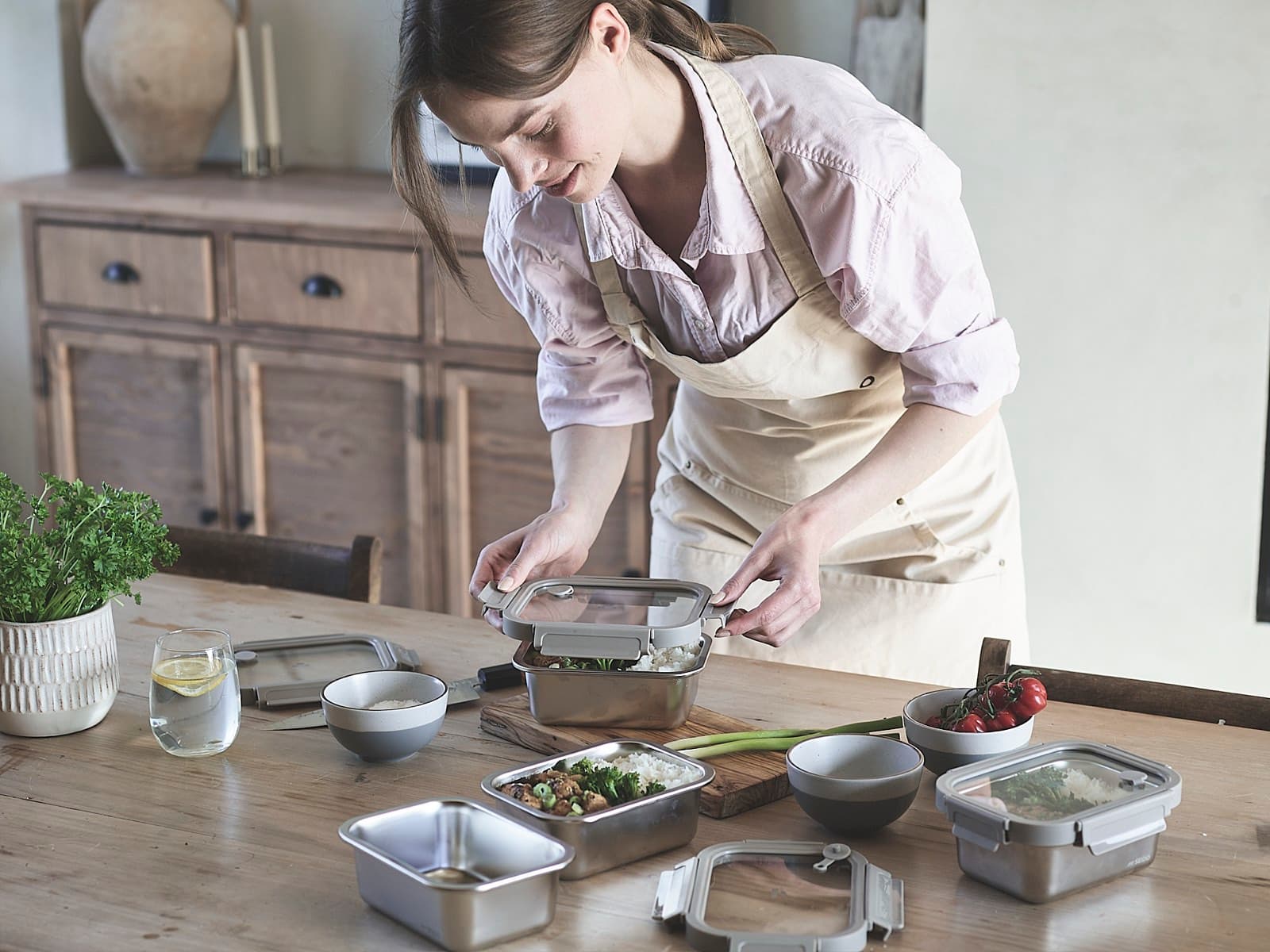
Both are good meal prep containers, and neither holds on to stains or smells the way plastic can. Glass lets you see the food and usually goes straight into a microwave. Stainless steel is lighter and won't shatter when dropped, but most steel containers can't be microwaved. Pick the material that suits your week.
Are stainless steel containers good for meal prep?
Yes. Meal prep asks a container to hold cooked food in the refrigerator for a few days, survive a bag or a commute, and come clean after oily, acidic or strongly spiced dishes. Stainless steel handles all of that. It's non-porous, so sauces and oils sit on the surface instead of soaking in, and it doesn't crack when it's knocked around.
Glass does the same jobs well too, and the two fail in different ways. Glass can break, and steel can't be seen through. Most of the decision comes down to which of those matters more in your routine: carrying and dropping, or seeing and reheating.
Whichever you choose, the food safety rules don't change. The USDA advises refrigerating cooked food within 2 hours, eating refrigerated leftovers within 3 to 4 days, and reheating leftovers to 165°F (74°C). A container keeps food organized. It doesn't make food last longer than those limits.
Which is lighter and harder to break: stainless steel or glass?
Steel is usually lighter. A glass container has thick walls to make up for glass's brittleness, so a full glass container can feel heavy by the time there are three or four in a bag. A stainless steel container of similar capacity uses a thin wall because the metal is tough, and the empty weight drops a lot.
The bigger difference is what happens when one falls. Steel may dent, but it keeps holding food. Glass can chip or crack, and tempered glass can break into many small pieces. If your containers ride in a backpack, go to a job site or get handled in a busy shared refrigerator, that's a real consideration. If they mostly go from your refrigerator to your microwave and back, it matters less.
Can glass and stainless steel containers go in the freezer?
Both can, with different cautions. The risk with glass is thermal shock. Glass expands as it warms and contracts as it cools, and when one part of the glass changes temperature much faster than another, the stress can crack it. Taking a glass container from the freezer and pouring hot liquid in, putting it straight into a hot oven, or setting it on a wet, cold counter while it's hot are the classic ways to crack it. Borosilicate glass expands less with heat than ordinary soda-lime glass, so it tolerates temperature swings better, but neither type is immune.
Stainless steel doesn't have a thermal shock problem at kitchen temperatures. It moves from freezer to counter to sink without cracking.
For both materials, leave headspace. Water expands by about 9 percent as it freezes, so a soup filled to the brim will push against the lid. Leave roughly half an inch to an inch (1 to 2.5 cm) below the rim. Thaw frozen meals in the refrigerator, in cold water or in the microwave, never on the counter, following USDA guidance.
Can you microwave glass or stainless steel meal prep containers?
Glass is the easier material here. Microwaves pass through glass and heat the food inside, so most glass containers are microwave-safe. Lids are a different matter. Many glass containers have plastic lids, and makers often say to remove them or vent them before heating, so follow the instructions for your lid.
Stainless steel works differently. Metal reflects microwaves instead of letting them through, so energy only enters through the open top. That's why most metal containers say not to go in a microwave at all, why sharp edges and crumpled foil can cause arcing, and why heating an empty container leaves the microwave energy with nothing to absorb it. A steel container is only microwave-safe if its maker tested it and gives the conditions. Follow those conditions exactly.
Heat reaches the food through the open top of a steel container, so stir halfway through and check that the center reaches 165°F (74°C) before eating.
Can glass or stainless steel containers go in the oven?
Glass bakeware is made for the oven, but many glass storage containers are not, and the lids almost never are. Check the maker's rating for the base and the lid separately, and avoid thermal shock: don't move glass straight from the freezer or refrigerator into a hot oven.
Stainless steel itself tolerates oven heat. The limit is usually whatever else is on the container: plastic lid frames, silicone gaskets or coatings. An oven rating only means something if it names the temperature, the time, and which part was tested.
Are glass and stainless steel containers dishwasher safe?
The glass and steel parts of most containers wash well in a dishwasher. The lid is usually the part that needs more care. Lids with plastic frames can warp in high heat, so the top rack is safer, and gaskets are where food residue and water collect.
Whichever material you choose, take the gasket out now and then, wash it and the groove it sits in, and let both dry before reassembling. Odors in meal prep containers often start there rather than in the container itself.
Staining, visibility and lifespan: what else should decide it?
Both glass and stainless steel are non-porous, so both resist staining and odors far better than plastic, which can take on the color of tomato sauce or curry and keep a garlic smell after washing. On glass, stains rarely hold. On steel, hard water or starchy food can leave a dull film, which usually comes off with a paste of baking soda and water or a little white vinegar.
Acidic food is generally fine in 304 stainless steel for a few refrigerated days; wash the container promptly, and for salty, brined or pickled food kept longer, glass is the safer choice.
What neither material fixes is the lid. Polypropylene frames and silicone gaskets can stain or hold smells, so clean them as described above.
Glass shows you what's inside. In a refrigerator full of identical containers, that's useful. With steel you'll want a label or a set routine, such as the same meal in the same row every week.
Lifespan depends on how each material fails. A glass container can last for years, until one bad drop or a sudden temperature change ends it. A steel container dents rather than breaks, so in rough use it tends to stay in service longer. With both materials, the lid and gasket usually wear out first, so a design with a sturdy lid is worth looking for.
A quick way to decide: choose glass if you reheat in the microwave every day and want to see your food. Choose stainless steel if you carry your meals, want lighter containers, or have broken glass ones before.
- Weight: steel is usually lighter for the same capacity.
- Drops: steel dents, glass can crack or break.
- Freezer: both work; glass needs care with sudden temperature changes.
- Microwave: glass usually yes; steel only when the maker has tested it, under its stated conditions.
- Oven: check the rating for the base and the lid separately, for either material.
- Visibility: glass wins; steel needs labels.
- Stains and odors: both resist them; lids and gaskets need the attention.
Where does the SEIDO lunch box fit?
The SEIDO Prep Series lunch box combines both materials: a 304 (18/8) stainless steel container with a glass lid set in a polypropylene frame with a silicone gasket, sold as a 3-pack of 27 oz (800 ml) containers. The container was lab-tested in a 1000 W microwave; use it with the lid off, at no more than 1000 W, and never microwave it empty. It was also tested in the freezer. Dishwasher safe, handwash recommended. Oven: 482°F (250°C) for one hour, container only, tested without its lid; the lid never goes in an oven. It comes with a 5-Year Limited Warranty and is made in China. See price on Amazon.
Cooking this way is what our stainless steel lunch box 3-pack is built for — 27 oz (800 ml) × 3, microwave-safe, dishwasher safe, 5-year limited warranty.
Frequently asked questions
- Is stainless steel or glass better for meal prep?
- Neither is better for everyone. Glass is see-through and usually microwave-safe, but it's heavier and can break. Stainless steel is lighter and dents instead of breaking, but you can't see inside, and it only goes in a microwave when the maker has tested it and says under which conditions.
- Do stainless steel containers affect the taste of food?
- Food-grade stainless steel such as 304 (18/8) is non-porous and doesn't absorb flavors or odors from the food it holds, so a clean container shouldn't change how a meal tastes over a normal few days of refrigerator storage.
- Why did my glass meal prep container crack?
- The usual cause is thermal shock: part of the glass changed temperature much faster than the rest. Moving glass from the freezer into a hot oven, adding boiling liquid to cold glass, or putting hot glass on a cold, wet surface can all do it. Chips from earlier knocks make cracking more likely.
- Can you put a stainless steel container in the microwave?
- Only if the maker has tested it and says so, and only under the stated conditions. Metal reflects microwaves, which is why most metal containers aren't allowed in a microwave. Where a steel container is rated, the conditions typically cover lid position, maximum wattage and never heating it empty.
- How long does meal prep last in the refrigerator?
- The USDA advises eating cooked leftovers within 3 to 4 days and refrigerating them within 2 hours of cooking. The container material doesn't extend that limit. Reheat leftovers to 165°F (74°C) before eating.
Browse all stainless steel lunch boxes or keep reading: Can You Microwave Stainless Steel? · Stainless Steel vs Plastic Food Containers · Stainless Steel Meal Prep Containers for Work and the Gym.