Stainless Steel vs Plastic Food Containers: The Honest Trade-Off
Published July 31, 2026
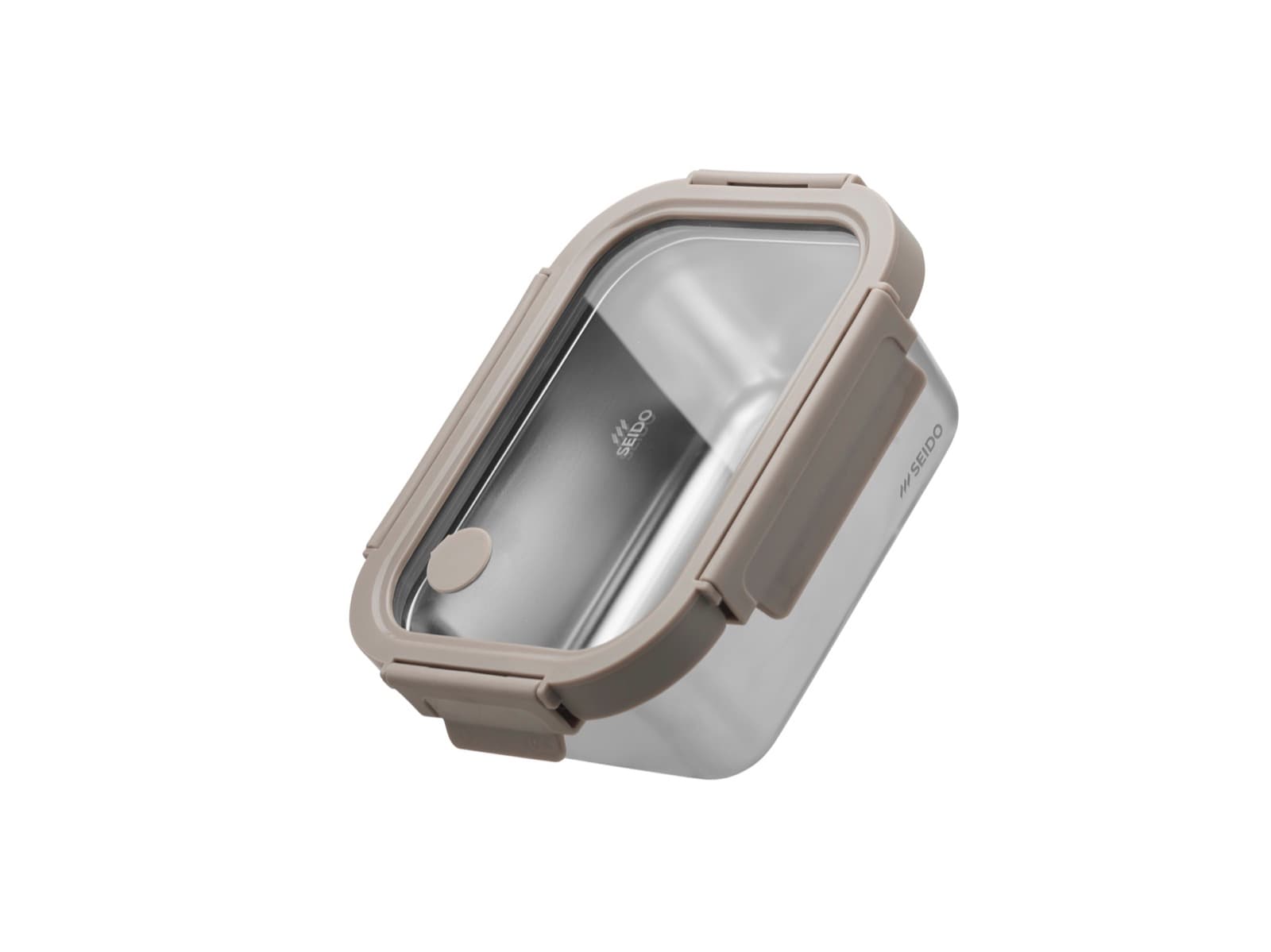
Plastic food containers are lighter and cheaper up front. Stainless steel containers resist staining, odor retention, denting, and surface wear, so they stay presentable far longer. And the traditional trade-off — metal can't go in the microwave — doesn't apply to SEIDO's stainless steel lunch boxes, which are microwave-safe by design.
That last point matters more than any other line in the comparison. The microwave has always been plastic's decisive everyday advantage. Remove it, and the choice comes down to how each material ages — which is where stainless steel pulls ahead.
Is stainless steel better than plastic for food containers?
The comparison is an honest trade, and it helps to name both sides plainly. Plastic wins on two counts: it weighs less in a bag, and it costs less at checkout. Stainless steel wins on nearly everything that happens after the first month of daily use: it resists staining, doesn't hold on to yesterday's curry, shrugs off the knocks of a commute, and washes clean without a lingering greasy film.
The one advantage plastic has traditionally kept is reheating. Ordinary metal containers can't go in the microwave, which forced steel owners to transfer food to a plate at the office. Our stainless steel lunch boxes close that gap — they're microwave-safe by design, an engineered feature of the container itself. With reheating off the table as a differentiator, the decision reduces to the trade below.
- Weight and up-front cost: plastic
- Stain and odor resistance: stainless steel
- Durability in a bag or on a countertop: stainless steel
- Microwave reheating: usually plastic — unless the steel container is engineered for it, as SEIDO's lunch boxes are
Do stainless steel containers stain or hold odors?
Stainless steel resists both, and the reason is the surface itself. Steel is hard, smooth, and non-porous. Oil-soluble pigments — the deep red in tomato sauce, the yellow-orange of turmeric in a curry — have nowhere to settle, so they rinse away with the oil that carries them. Same story with smells: a container that held garlicky leftovers on Monday shouldn't announce it on Tuesday, and a non-porous steel surface is why.
Plastic behaves differently because it's soft. Everyday utensil contact and scrubbing leave microscopic scratches, and those scratches give pigment and oil somewhere to lodge. Reheating makes it worse: warmth softens the surface and drives color in deeper, which is why a plastic container that's held chili or tikka masala a few times often takes on a permanent orange cast. Steel, washed with ordinary dish soap, comes back looking the way it went in.
How durable are stainless steel containers compared to plastic?
Think about where a packed lunch actually lives: dropped into a backpack, wedged against a laptop on a commute, shifted around a gym bag, stacked in an office refrigerator. Stainless steel resists denting under that treatment and doesn't crack the way rigid plastic can when it's compressed at the wrong angle or dropped onto tile.
Plastic's failure mode is quieter but steady. Corners and lid tabs flex with every open and close, and eventually fatigue. Repeated reheating cycles can warp thin walls until lids no longer sit true. Stains and clouding make a container look spent long before it actually fails, and containers that look spent tend to get replaced. To be fair to both materials: steel isn't indestructible — a hard drop can leave a cosmetic scuff — but a scuffed steel container keeps doing its job, while a warped or cracked plastic one is done.
Can you microwave a stainless steel food container?
For ordinary metal containers, no — and this is the single biggest reason people default to plastic. Metal reflects microwave energy rather than letting it pass through to the food, so ordinary steel containers aren't designed for microwave use. The standard advice has always been to transfer your meal to a plate before reheating — exactly the kind of small daily friction that decides what people actually carry.
Our stainless steel lunch boxes are the exception: they're microwave-safe by design. That's an engineered feature of the container, not a workaround — pack the meal, refrigerate it, and reheat it in the same container at the office. This is the point that changes the whole comparison. Plastic's core argument was never that it ages well; it was that it was convenient at lunchtime. A steel container engineered for the microwave keeps steel's resistance to staining, odors, and wear, and matches plastic's convenience where it counted most.
Are stainless steel containers easier to clean than plastic?
Yes, and for the same reason they resist stains: the surface is smooth and non-porous, so it resists holding residue in the first place. Warm water, ordinary dish soap, and a normal sponge take care of the oily sauces and dressings that leave a stubborn film on plastic. There's no need for the familiar plastic-container rituals — soaking overnight, scrubbing at a stain that never quite lifts, or retiring a container because it smells faintly of last week's meal.
Scratched plastic compounds its own problem. Each scratch is a small channel that holds oil and pigment, which makes every subsequent wash a little less effective. A steel surface stays closed, so cleaning stays easy for the life of the container rather than getting harder each month.
Which stainless steel food container should you choose?
If the microwave point is what's kept you on plastic, our stainless steel lunch box 3-pack is built for exactly this switch. Each container holds 27 oz (800 ml) — a full adult meal — and the set of three covers a practical week: batch-cook on Sunday, portion three meals, and rotate them through office days, gym sessions, and the commute in between.
They're microwave-safe by design, so the pack-refrigerate-reheat routine works in one container from start to finish. Stainless steel construction means they resist the staining, odor retention, and wear that send plastic containers to the recycling bin.
Cooking this way is what our stainless steel lunch box 3-pack is built for — 27 oz (800 ml) × 3, microwave-safe, dishwasher safe, 5-year limited warranty.
Frequently asked questions
- Are stainless steel food containers worth it?
- For anyone who packs meals regularly, yes. Plastic costs less up front, but containers that stain, warp, or crack tend to get replaced again and again. Stainless steel resists all three, so one purchase stays in rotation far longer. If you pack office lunches, gym meals, or weekly meal prep, the value case favors steel.
- Do stainless steel containers work for hot food at a desk?
- Yes — pack the meal cold, refrigerate it, and reheat it at lunchtime. Ordinary metal containers force a transfer to a plate first, but SEIDO's stainless steel lunch boxes are microwave-safe by design, so you can reheat directly in the container at your desk and eat from it.
- Do metal containers make food taste metallic?
- Not with stainless steel. Stainless is non-reactive with typical packed food: the chromium in the alloy forms a stable, self-repairing surface layer that keeps the metal from interacting with what it touches. Acidic sauces, dressings, citrus, and marinades taste the way they should, even after hours in the container.
- Why can't most metal containers go in the microwave?
- Metal reflects microwave energy instead of letting it pass through to the food, so ordinary metal containers heat food poorly and aren't designed for microwave use — the standard advice is to transfer food to a plate. SEIDO's stainless steel lunch boxes are the exception: they're microwave-safe by design, engineered for reheating in the container.
- Is a stainless steel lunch box completely free of plastic?
- Usually not, and it's worth checking before you buy. In most stainless steel lunch boxes — SEIDO's included — the surface that holds your food is 304 (18/8) stainless steel, while the set includes food-safe polypropylene (PP) components. That's why we describe the food-contact surface as stainless steel rather than claiming the set contains no plastic at all. If your goal is to move away from plastic where it touches your food, the steel body is the part doing that work.
Browse all stainless steel lunch boxes or keep reading: Can You Microwave Stainless Steel? · Stainless Steel Meal Prep Containers for Work and the Gym · How to Read a Cookware Spec Sheet: Grade, Ply, and What a Test Certificate Proves.