Is It Safe to Microwave Food in Plastic Containers?
Published September 17, 2026
Microwaving food in a plastic container labeled for microwave use is within the conditions that container was designed for. The label does not cover every situation. Heat, fatty food, long heating times, and worn or scratched plastic all increase how much material moves into food. Reheating in glass or ceramic avoids the question.
What does "microwave-safe" on a plastic container actually mean?
In the US, plastics that touch food are regulated by the FDA as food contact materials. Substances used in food-contact plastics must be authorized for that use, and for many of them the FDA evaluates how much can migrate into food under the intended conditions of use, which can include heating.
There is no single federal definition printed behind the words "microwave-safe" on a container. The label is the manufacturer telling you the product was made for that use. It describes the container as sold, used the way the maker intended.
The label does not describe a container that is years old, cracked, cloudy, or deeply scratched. It does not describe a takeout tub or a margarine tub that was never meant to be reheated. FDA and USDA consumer guidance both say to microwave only in containers labeled for that use.
If you use plastic, keep it labeled, intact, vented, and heated only as long as the food needs. The simplest alternative is to reheat food in glass or ceramic, or in a container made and tested for microwave use from another material.
What makes chemicals move from plastic into food?
Migration is the transfer of small molecules from a packaging material into the food it touches. Plastics contain the polymer itself plus additives, such as stabilizers, plasticizers, and colorants, and small amounts of leftover unreacted material. Some of these can move.
Three variables drive how much moves. They act together, and a microwave can raise all three at once.
- Heat: molecules move faster at higher temperatures, and polymers soften, so migration rises as temperature rises.
- Fat: many plastic additives dissolve more readily in fat than in water, so oily, cheesy, or buttery food tends to draw out more than broth or plain vegetables.
- Time: migration continues for as long as contact and heat continue, so a long reheat moves more than a short one.
What does the research say about microplastics from food containers?
Microplastics are plastic particles smaller than 5 mm. Nanoplastics are far smaller, below one micrometer. Both can come off a plastic surface through heat, abrasion, and wear.
A 2023 laboratory study from the University of Nebraska–Lincoln, published in Environmental Science & Technology, microwaved polypropylene containers and a polyethylene reusable food pouch filled with water or a weak acid. The researchers reported that the containers released up to millions of microplastic particles and billions of nanoplastic particles per square centimeter within three minutes. Microwaving released more particles than refrigeration or room-temperature storage.
That study measured release under lab conditions. It did not measure what happens inside a person who eats the food. Scientists are still working out how much of these particles people take in, where they go in the body, and what effects they have, if any. The honest summary today is that heating plastic sheds particles, and the health significance is not yet settled.
Does an old or scratched plastic container change anything?
Yes. Wear changes the surface the label was written for. Scratches from forks and scrubbing pads add surface area, and more surface area gives more places for particles to come loose.
Repeated heating and dishwasher cycles can also leave plastic cloudy, warped, or stained. Those are signs the material has changed. Food-storage guidance generally advises replacing plastic containers once they crack, warp, or become deeply scratched.
How can you microwave food more safely if you use plastic?
The practical steps all work on the same three variables: heat, fat, and time.
- Transfer the food to a glass or ceramic dish labeled for microwave use before heating.
- Use only plastic containers labeled for microwave use, and never reuse single-use takeout tubs or cold-storage tubs for reheating.
- Vent the lid or set it loosely on top so steam can escape and pressure does not build.
- Keep plastic wrap from touching the food; cover with a paper towel instead.
- Heat at lower power for shorter bursts, stirring between them, rather than one long run at full power.
- Retire containers that are cracked, warped, cloudy, or deeply scratched.
Can stainless steel containers go in the microwave?
Metal behaves differently from plastic in a microwave. Microwaves pass through glass, ceramic, and most plastics, but they reflect off metal. In a steel container, energy reaches the food mainly through the open top, so food heats more slowly than it would in glass.
Whether a given metal container is suitable depends on its shape and on testing. Sharp points, thin edges, crumpled foil, and decorative metal trim can concentrate charge and cause sparking, which is called arcing. A metal container with nothing in it gives the microwave energy nowhere to go, which can damage the oven. That is why a metal container should only go in a microwave if its maker says so, and never empty.
Our separate guide, Can You Microwave Stainless Steel?, covers the physics in more detail.
Where does a stainless steel lunch box fit in?
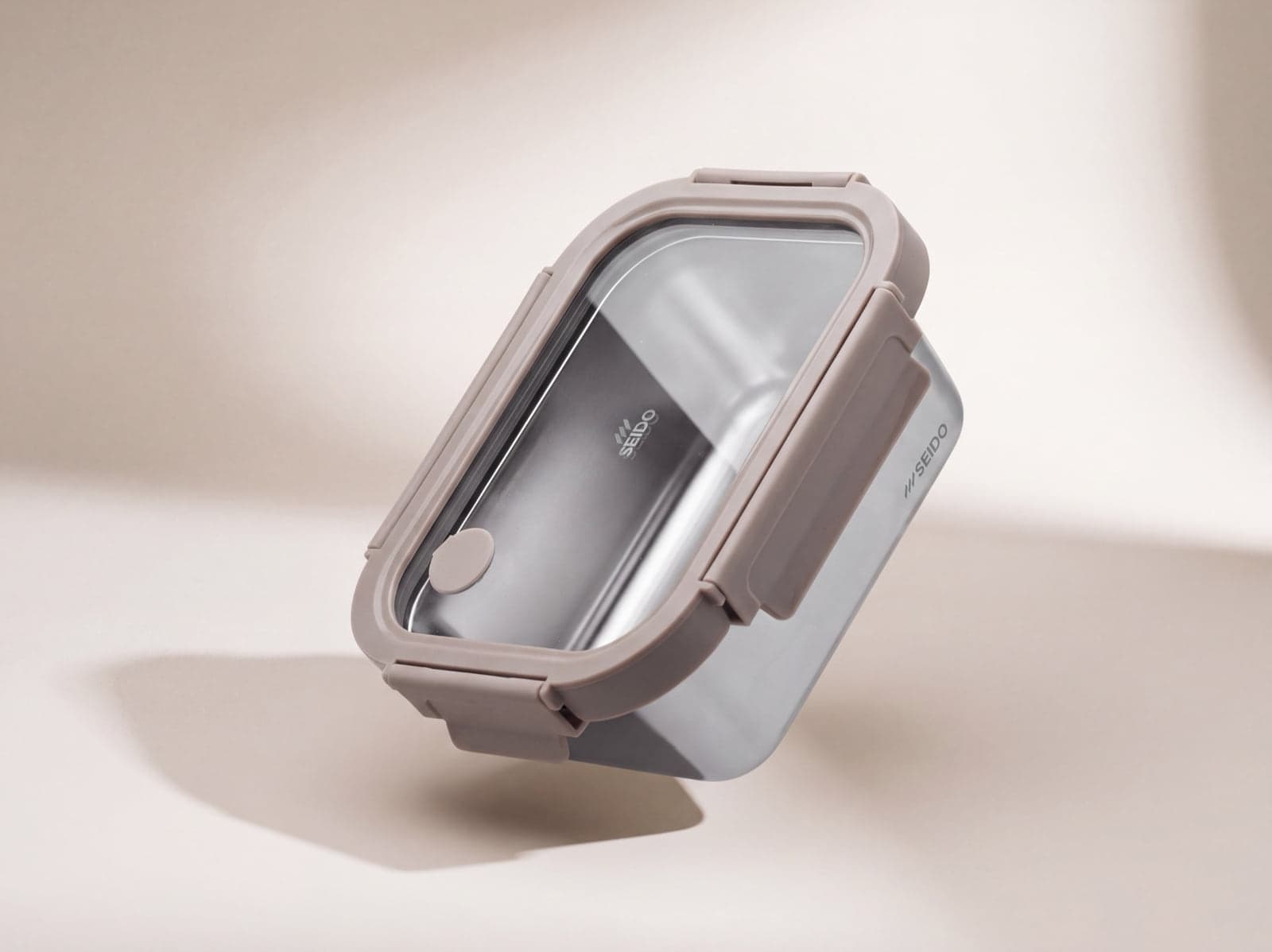
The SEIDO Prep Series lunch box is a 3-pack of 27 oz (800 ml) containers with a 304 (18/8) stainless steel body. Its glass lid has a polypropylene frame and a silicone gasket, so the product includes plastic parts. The lid was not part of the microwave test, so take it off before heating. The container was microwave-tested by an independent laboratory (report TJHL2406005341CW): five 10-minute cycles at full power in a 1000 W oven, with no arcing or sparking. That result applies to the container only, lid off, in a microwave of up to 1000 W. Never heat the container empty. It is dishwasher safe, handwash recommended, and it carries a 5-Year Limited Warranty. See price on Amazon.
Cooking this way is what our stainless steel lunch box 3-pack is built for — 27 oz (800 ml) × 3, microwave-safe, dishwasher safe, 5-year limited warranty.
Frequently asked questions
- Is it safe to microwave food in plastic containers?
- Use only plastic containers labeled for microwave use, as FDA and USDA consumer guidance advises. The label covers the container as sold, used as intended. Heat, fatty food, long heating times, and worn or scratched plastic all increase how much material can move into food, so transferring food to glass or ceramic removes the question.
- Do plastic containers release microplastics in the microwave?
- Laboratory research says yes. A 2023 University of Nebraska–Lincoln study in Environmental Science & Technology reported that polypropylene containers and a polyethylene reusable food pouch released up to millions of microplastic particles and billions of nanoplastic particles per square centimeter within three minutes of microwaving. What those particles do in the body is still being studied.
- Why does fatty food matter when heating plastic?
- Many plastic additives dissolve more readily in fat than in water. Oily or cheesy food in contact with hot plastic can draw out more of those substances than water-based food. Heat and time add to the effect, so a long reheat of a fatty dish in plastic is the combination most worth avoiding.
- Can I reheat food in a takeout container?
- Only if the container is labeled for microwave use. Many takeout tubs, deli containers, and margarine tubs are designed for cold or room-temperature food and were not made to be heated. Transfer the food to a glass or ceramic dish labeled for microwave use instead.
- Can stainless steel containers go in the microwave?
- Only when the maker has designed and tested them for it. Metal reflects microwaves, so food heats through the open top, more slowly than in glass. A metal container should never go in empty, and sharp edges or trim can cause sparking. The SEIDO lunch box container (container only, lid off) was lab-tested in a microwave of up to 1000 W; never heat it empty.
- When should I throw out a plastic food container?
- Replace it when it is cracked, warped, cloudy, or deeply scratched. Wear adds surface area and changes the material the microwave-safe label was written for. A container that no longer seals, or that holds stains and odors after washing, has also passed its useful life.
Browse all stainless steel lunch boxes or keep reading: Can You Microwave Stainless Steel? · Stainless Steel vs Plastic Food Containers · Stainless Steel Meal Prep Containers for Work and the Gym.