How to Clean a Stainless Steel Lunch Box: Odors, Rust Spots and the Gasket
Published September 17, 2026
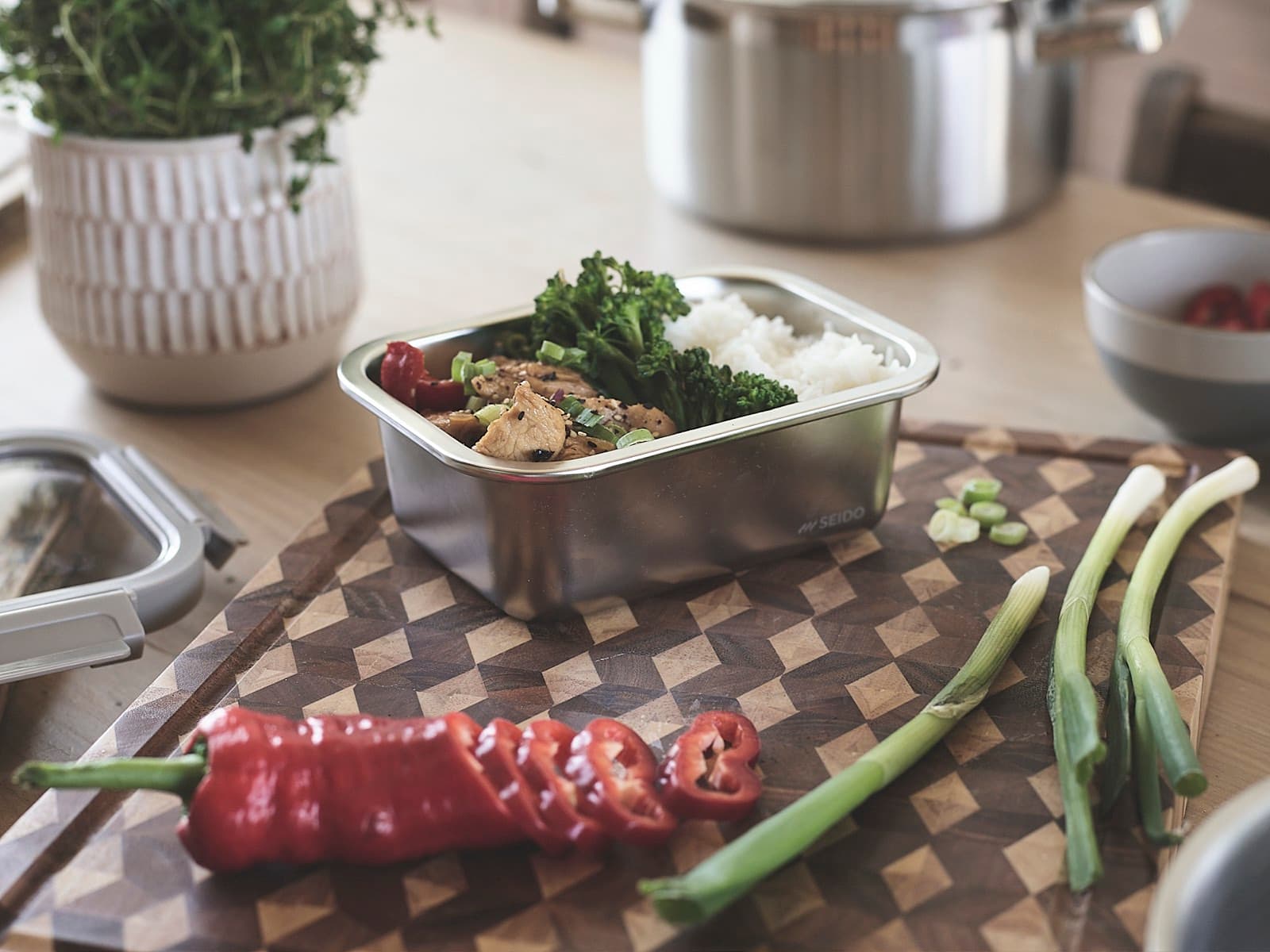
Wash a stainless steel lunch box in warm, soapy water soon after eating, clean the lid separately, and let every part dry fully before closing it. Lingering odors usually live in the lid's silicone gasket, not the steel. Most orange spots clean off. Many containers are dishwasher safe, but handwashing is gentler on the lid's seal.
How do you clean a stainless steel lunch box every day?
The routine that prevents most problems is short: empty it, wash it, dry it completely. Food residue and trapped moisture cause most odors and spots.
Rinse the container and lid as soon as you can after eating. Dried-on sauce and starch take far more scrubbing than fresh residue.
Then wash both in warm water with ordinary dish soap and a soft sponge or brush. Pay attention to the inside corners of the container and the channel around the lid's gasket, where residue collects out of sight.
- Wash the lid and the container separately, so water reaches the gasket channel.
- Use a soft sponge, a nylon brush or a non-scratch pad, not steel wool.
- Rinse well, so no soap film is left on the steel.
- Dry with a clean dish towel, then leave the parts apart to air-dry fully.
- Store the container with the lid off or resting loosely on top, so moisture isn't sealed in.
How do you get smells out of a stainless steel lunch box?
Start by finding where the smell actually is. Stainless steel is non-porous, so it resists holding odors. A smell that survives a proper wash usually comes from a thin oily film left on the steel, or from the lid's silicone gasket, which can absorb oils and strong aromas such as garlic, curry and fish over time.
For the steel, baking soda is the gentle first step. It's a mild alkali and a very fine abrasive, so it loosens oily films and neutralizes acidic odor compounds. Rub a paste of baking soda and a little water over the inside, leave it for about 15 minutes, then rinse and dry. For a stronger smell, soak the container in warm water with a couple of tablespoons of baking soda dissolved in it.
If a fishy smell hangs on, try white vinegar next. Much of a fishy smell comes from alkaline compounds, and a mild acid neutralizes them. Wipe or soak with equal parts white vinegar and water for a few minutes, then rinse and dry. Use the two treatments one after the other, never mixed, because they neutralize each other.
One warning: some advice suggests baking silicone to drive out smells. Never do that with a lunch box lid. The lid never goes in an oven, because its polypropylene frame softens at oven temperatures.
Do stainless steel containers rust?
Stainless steel resists rust, but it isn't immune to it. Its protection comes from chromium, which reacts with oxygen to form a very thin, invisible oxide film that shields the iron underneath and re-forms by itself when scratched. Orange or brown marks on a lunch box are usually one of the three things listed below. Only rust transfer is foreign material sitting on the surface. Tea staining is shallow, cosmetic corrosion of the steel's surface, and pitting is deeper, localized corrosion.
Chlorides are the common thread. Chloride ions, from table salt, salty brines and marinades, and chlorine bleach, can break down the protective film at a single point. That's why the standing advice for stainless steel is to rinse salty residue off promptly, keep bleach away from it, and never leave it sitting wet.
To remove surface spots, rub on the baking soda paste described above, or a gentle cleanser made for stainless steel; some are based on oxalic acid, which dissolves rust deposits. Work gently with a soft cloth, rinse thoroughly and dry. If your container has a brushed finish, rub along the grain lines. Skip steel wool: it leaves behind the very iron particles that cause rust transfer.
- Rust transfer: tiny iron particles deposited on the surface from steel wool, a rusting dish rack or other items in the dishwasher. The particles rust, not the container, and the marks clean off.
- Tea staining: light surface corrosion that shows as a brown discoloration where salt and moisture sit on steel. It's cosmetic, doesn't go deep, and cleans off.
- Pitting: tiny dark pinpoints that don't wipe away. This is real, localized corrosion, usually from chlorides left on wet steel for long periods.
How do you clean a lunch box lid and silicone gasket?
The gasket is the silicone ring that seals the lid against the container, and it's the part of a lunch box that needs the most attention. Food and water work into the channel it sits in, and a gasket that goes back in damp is where smells and dark spots start.
If your lid's gasket is designed to come out, ease it out of its channel with a fingertip or a blunt tool, never a knife, which can nick the silicone. Wash the gasket and the channel in warm, soapy water, with a small soft brush for the groove, and soak the gasket in the baking soda or vinegar solution above if it smells. Let every part dry completely, then press the gasket back in evenly so it sits flat. If the gasket isn't meant to come out, follow the lid's care instructions and clean the edge with a soft brush.
Treat a glass lid gently: glass can crack under a sudden temperature change, so don't run a hot lid under cold water.
If your maker supplies spare gaskets or lids, replace the gasket, or the lid, when the silicone is torn, cracked, hardened or stretched so it no longer sits flat, or when dark spots and smells return after thorough cleaning. A gasket that doesn't seat evenly won't seal the lid well.
Are stainless steel lunch boxes dishwasher safe?
It depends on the maker's instructions, and on which part you mean: the container and the lid are often rated differently. SEIDO's lunch box containers are dishwasher safe, handwash recommended, lab-tested to EN 12875-1 over 50 cycles. The lid goes on the top rack, per the manufacturer's care instructions.
Handwashing is recommended because it's gentler. Dishwasher detergents are harsher than dish soap, and over many cycles they are harder on a lid's plastic and silicone parts. If a container comes out looking different, the color tells you the cause.
- A white or cloudy film is mineral deposits from hard water, or detergent residue. Wipe with the vinegar solution from the odor section, rinse and dry.
- Rust-colored specks are usually rust transfer from other items in the load, or dishwasher softener salt spilled into the wash. Clean them off as described in the rust section, and wipe up any spilled salt around the softener cap.
- A rainbow sheen is usually a thin film of minerals or detergent. Wipe with the vinegar solution or a stainless steel cleanser, rinse and dry.
- A straw-to-blue tint that won't wipe off is heat tint. It forms only when steel is heated strongly, for example on a stovetop or in an oven, never in a dishwasher. It's cosmetic.
What wears out on a stainless steel lunch box, and what doesn't?
The steel body is the long-lived part. Everyday washing doesn't wear the steel away, and 304 (18/8) stainless steel resists staining and resists holding odors, so a well-kept container can stay clean-looking and clean-smelling for years. Expect cosmetic changes instead: fine scratches from utensils and scrubbing, and dents if it's dropped. A dent near the rim is the one to watch, because it can stop the lid from sitting flat.
The lid is where wear happens. Silicone gaskets harden and stretch with age, and plastic frames can scuff or crack, so the lid is the part to treat most gently.
Our stainless steel lunch box 3-pack is designed for this daily routine at the office, the gym or on the commute: three 27 oz (800 ml) containers with 304 (18/8) stainless steel bodies, and glass lids with a polypropylene frame and a silicone gasket for a sealed lid. The containers are dishwasher safe, handwash recommended, and the set is backed by a 5-Year Limited Warranty.
Cooking this way is what our stainless steel lunch box 3-pack is built for — 27 oz (800 ml) × 3, microwave-safe, dishwasher safe, 5-year limited warranty.
Frequently asked questions
- How do you get smells out of a stainless steel lunch box?
- Wash the container and lid separately, then find where the smell is. Rub a baking soda paste over the steel for about 15 minutes, rinse and dry. For fishy smells, wipe with diluted white vinegar. If the smell is in the silicone gasket, soak it the same way and dry it fully.
- Do stainless steel containers rust?
- Stainless steel resists rust but isn't immune to it. Most orange spots on a lunch box are rust transfer from steel wool or other items in the dishwasher, or cosmetic tea staining from salt and moisture, and both clean off. True pitting is rarer and usually comes from chlorides, such as salt or bleach, left on wet steel for long periods.
- Can you put a stainless steel lunch box in the dishwasher?
- Check the maker's instructions for the container and the lid separately. SEIDO's lunch box containers are dishwasher safe, handwash recommended, lab-tested to EN 12875-1 over 50 cycles, and the lid goes on the top rack, per the manufacturer's care instructions.
- Can you use bleach on a stainless steel lunch box?
- It's best avoided. Chlorine bleach is a source of chlorides, which can break down the protective chromium oxide film on stainless steel and cause pitting. Warm soapy water and baking soda handle everyday cleaning and odors.
- Why is my stainless steel lunch box cloudy after the dishwasher?
- A white or cloudy film is usually mineral deposits from hard water or leftover detergent, not damage to the steel. Wipe with diluted white vinegar, rinse, and dry with a towel straight after the cycle.
- When should you replace a lunch box gasket?
- If your maker supplies spares, replace the gasket when the silicone is torn, cracked, hardened or stretched so it won't sit flat, or when dark spots or smells return after thorough cleaning. A gasket that doesn't seat evenly won't seal the lid well.
Browse all stainless steel lunch boxes or keep reading: Can You Microwave Stainless Steel? · Stainless Steel vs Plastic Food Containers · Stainless Steel Meal Prep Containers for Work and the Gym.