Can You Freeze Food in Stainless Steel Containers?
Published September 17, 2026
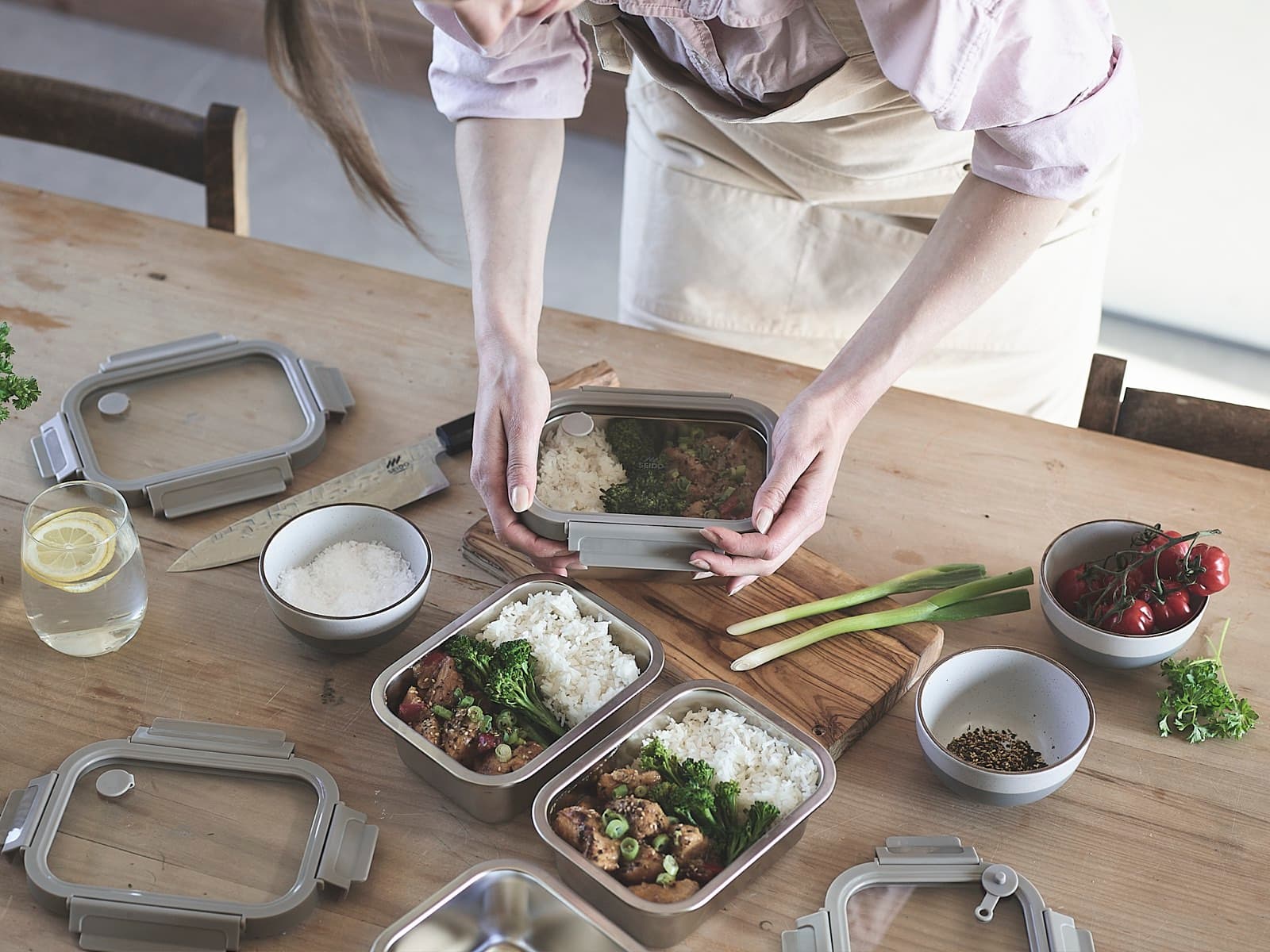
Yes. Stainless steel handles freezer temperatures without cracking, warping, or absorbing odors. Cool the food first, leave headspace for liquids to expand, and label the outside because you can't see through steel. Thaw in the refrigerator before reheating. Treat the lid by its own materials, not the container's.
Can you put stainless steel containers in the freezer?
Stainless steel is a metal alloy, and household freezer temperatures are well within what it tolerates. It doesn't turn brittle at 0°F (-18°C) the way some plastics can. It won't crack the way glass can when it meets a sudden change in temperature.
Steel is also non-porous. Tomato sauce, curry, and garlic don't stain it or leave a smell behind after washing. That matters for freezer meal prep, where the same container may hold chili one month and oatmeal the next.
The one practical difference from plastic or glass is visibility. You can't see what's inside a steel container, so labeling becomes part of the method rather than an afterthought.
How much headspace should you leave when freezing soup or sauce?
Water expands by about 9 percent as it turns to ice. Soups, stocks, sauces, and stews are mostly water, so they grow as they freeze. Fill a container to the brim and the expanding food has nowhere to go but up, which can push against the lid or bulge over the rim.
Leave roughly half an inch to an inch (1 to 2.5 cm) of space below the rim for liquid-heavy food. Drier food, like cooked grains, roasted vegetables, or portioned proteins, needs much less room because there is less free water to expand.
- Soups, stocks, and thin sauces: leave about 1 in (2.5 cm) of headspace.
- Stews, chili, and thick sauces: leave about 1/2 in (1.3 cm).
- Grains, roasted vegetables, and cooked meat: fill to just below the rim.
- Freeze containers upright and level until the contents are solid.
Should you cool food before freezing it?
Yes. Hot food put straight into the freezer warms the items around it and makes the freezer work harder. The USDA advises refrigerating cooked food within two hours, and cooling it in the fridge before it goes into the freezer is a simple way to do that.
Shallow portions cool faster than deep ones. This is one place steel helps: metal conducts heat far better than plastic, so heat leaves the food through the container walls more quickly. Portion a large batch into individual containers rather than cooling it in one deep pot.
Can the lid stay on in the freezer?
Usually, but check what the lid is made of and follow the manufacturer's guidance for that lid. A steel container and its lid are often different materials, and cold affects them differently.
Silicone gaskets generally stay flexible at freezer temperatures. Polypropylene, a common plastic for lid frames, gets stiffer and more brittle as it gets colder, so a frozen lid is more likely to crack if it's dropped or forced. Glass is more sensitive than steel to sudden temperature changes.
In practice, that means a few habits. Close the lid only after the food has cooled and you've left headspace. Let a frozen lid warm up for a few minutes before prying it off. Don't run a frozen glass lid under hot water.
How do you prevent freezer burn in a steel container?
Freezer burn is dehydration. Ice crystals at the exposed surface of food slowly turn straight to vapor in the dry freezer air, leaving pale, leathery patches. The food is still safe to eat, but the texture and flavor suffer.
The fix is limiting air contact. Fill containers closer to the top for dry food, and for soups, press a piece of parchment paper onto the surface before closing the lid. Keep the freezer door closed as much as you can, because each temperature swing encourages ice to move out of the food.
What's the safest way to thaw and reheat frozen meal prep?
The USDA lists three safe ways to thaw food: in the refrigerator, in cold water, or in the microwave. Thawing on the counter is not one of them, because the outer layer can sit in the temperature range where bacteria grow while the center is still frozen.
Refrigerator thawing is the most forgiving. Move tomorrow's container from the freezer to the fridge the night before. A single portion of soup or stew is usually ready to reheat by the next day.
Before microwaving, check the container's instructions. Many metal containers are not meant for the microwave at all. Where a manufacturer does permit it, follow the stated conditions exactly, including whether the lid comes off and the maximum wattage. Food thawed in the microwave should be cooked or eaten right away.
How should you label and rotate frozen food?
Label every container with what's inside and the date it went in. A strip of masking tape and a marker on the lid or side works, and it peels off cleanly in the wash. Steel hides its contents, so a missing label means opening containers to find dinner.
Rotate first in, first out. Put new containers at the back and pull from the front. Food held at 0°F (-18°C) stays safe indefinitely according to the USDA, but quality slowly declines, so most cooked dishes keep their quality for a few months.
Freezing food in SEIDO lunch boxes
SEIDO Prep Series lunch boxes come as a 3-pack of 27 oz (800 ml) containers with a 304 (18/8) stainless steel body and a glass lid with a polypropylene frame and silicone gasket. The container was lab-tested in the freezer; that test covered the empty container, without its lid. It was also lab-tested for the microwave, lid off, at a maximum of 1000 W, never empty, and is dishwasher safe, handwash recommended. The headspace and thawing advice above applies here as it does to any container. See price on Amazon.
Cooking this way is what our stainless steel lunch box 3-pack is built for — 27 oz (800 ml) × 3, microwave-safe, dishwasher safe, 5-year limited warranty.
Frequently asked questions
- Does stainless steel keep frozen food colder than plastic?
- Not in any useful way. Steel conducts heat better than plastic, so a steel container cools down faster in the freezer, but it also warms up faster once it's out. A container is not insulation. For carrying frozen or chilled food, use an insulated bag with an ice pack.
- Can you freeze liquids in stainless steel containers?
- Yes, as long as you leave room for expansion. Water grows by about 9 percent as it freezes, so leave about 1 in (2.5 cm) of headspace for soups and stocks, and freeze the container upright until solid.
- Will acidic food damage a stainless steel container in the freezer?
- Tomato sauces and citrus-based dishes are fine in 304 stainless steel for normal storage. Chemical reactions slow down sharply at freezer temperatures, and 304 steel resists corrosion from everyday foods. Wash the container once it's empty rather than leaving residue to dry on.
- Can you put a frozen stainless steel container straight in the oven?
- Only if the manufacturer says the container is oven-safe, and never with a lid that isn't rated for the oven. Thawing in the refrigerator first gives more even heating, because a frozen block tends to overcook at the edges before the center warms through.
- Why is my frozen food covered in ice crystals?
- Ice on the surface usually means air space in the container or temperature swings in the freezer. Moisture leaves the food and refreezes as frost. Fill containers closer to the top, press parchment onto soups, and open the freezer less often.
Browse all stainless steel lunch boxes or keep reading: Can You Microwave Stainless Steel? · Stainless Steel vs Plastic Food Containers · Stainless Steel Meal Prep Containers for Work and the Gym.