Best Lunch Box for Adults: How to Choose for Work, the Gym and the Commute
Published September 17, 2026
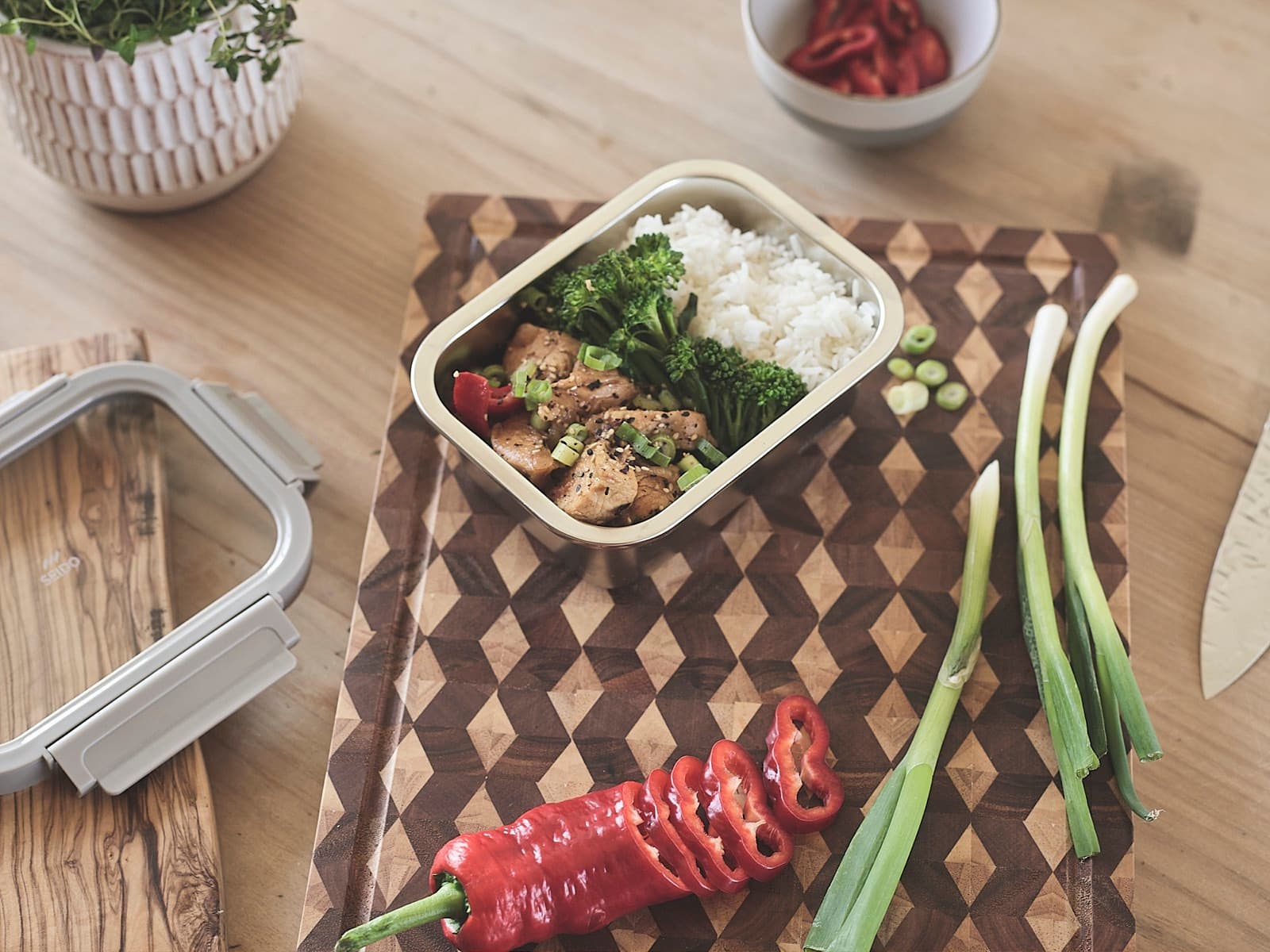
The best lunch box for adults does five things. It holds a real adult portion. It reheats the way your workplace allows. It stays sealed in a bag. It cleans quickly at the end of the day. It lasts for years of daily use. Material, lid design and capacity decide all five.
What should an adult lunch box actually do?
No single box wins for everyone. An office worker with a microwave, a lifter carrying three meals to the gym and a shift worker with no kitchen at all need different things. Start with your routine, then match the material and the lid to it.
An adult lunch is usually bigger, wetter and more often reheated than a snack. Leftovers, rice bowls, stews and dressed salads all carry liquid. That puts more demand on the lid and the material than a sandwich ever does.
Judge any lunch box against five jobs. Portion: does it hold a full meal without packing food against the lid? Reheating: can the part holding the food go in the appliance you actually have at work? Transport: does the lid stay closed when the box is on its side in a bag? Cleaning: can you get it clean in a minute, with no corners that trap food? Durability: will it still look and close the same after a few hundred lunches?
A box that fails one of these gets left in a cabinet. That is the real cost of a poor choice.
Stainless steel, plastic or glass: which lunch box material is best?
Each material makes a different trade. None is right for every routine.
Stainless steel is strong for its weight and does not shatter when dropped. It does not absorb oils or pigments, so tomato sauce and curry do not leave a stain or a lingering smell. It does not break down with repeated washing the way some plastics dull and scratch. Its limit is reheating: many steel containers are not meant for the microwave, so check what the maker has tested.
Plastic is the lightest and usually the cheapest. It is convenient in the microwave when labeled for it. Over time it can scratch, stain and hold odors, particularly with oily or strongly colored food.
Glass is inert, easy to see into and good in the microwave. It is also the heaviest of the three, and it can chip or break if a bag is dropped. That matters on a commute.
For a deeper comparison, read our guides to stainless steel versus plastic and stainless steel versus glass containers.
- Stainless steel: durable, stain- and odor-resistant, check reheating guidance.
- Plastic: lightest, microwave-friendly when labeled, can stain and scratch over time.
- Glass: inert and microwave-friendly, heavier and breakable.
What makes a lunch box lid seal, and what does "sealed" really mean?
Most of a lunch box's performance lives in the lid. A seal comes from two things working together: a flexible gasket and enough clamping force to press it flat against the rim.
The gasket is usually silicone. Silicone stays flexible across a wide temperature range, so it keeps its shape after the fridge, the freezer and hot water. When the lid is pressed down, the gasket fills small gaps between the lid and the container's rim.
The clamping force comes from clips, latches or a screw thread. Clips that snap over the rim apply pressure evenly around the edge. A lid that simply rests on top has no clamping force, so it is a cover rather than a seal.
Be careful with broad promises that a container will never leak. How well any seal holds depends on how full the box is, how thin the liquid is, whether the gasket is seated correctly and whether food is caught on the rim. A sealed lid with a clean, seated gasket is a sensible expectation. For soups and thin sauces, keep the box upright and leave space below the rim.
How big should an adult lunch box be?
Capacity is easier to judge in meals than in numbers. A 27 oz (800 ml) container fits a typical single meal: a portion of grain or pasta, a protein and vegetables, with room left under the lid. That covers most office lunches and most batch-cooked meal prep portions.
Larger containers, around 40 oz (1.2 L), suit bigger appetites, high-volume training diets, leafy salads that take up space without much weight, or a lunch plus a snack in one box.
Several separate containers often work better than one large divided box. Separate boxes keep a dressed salad apart from a hot dish, let you reheat only what needs heat and stack neatly in a fridge for a week of meal prep.
Which lunch box suits your routine: office, gym, commute or shift work?
Work backward from where and how you will eat.
- Office with a microwave: choose a container whose food-holding part is tested for microwave use, and follow its limits on lid position and power.
- Gym and training days: prioritize several same-size containers so portions are consistent and easy to track, plus a lid that stays shut in a crowded gym bag.
- Commute by foot, bike or transit: weight and drop resistance matter. Steel and plastic survive a knock better than glass.
- Shift work or no kitchen: plan for food eaten cold or at room temperature, pack it cold, and carry it in an insulated bag with an ice pack.
- Batch cooking on Sunday: look for containers that stack, go in the freezer and clean easily, so a week of meals is simple to prepare and put away.
How do you keep a packed lunch safe until you eat it?
The container does not keep food cold on its own. Perishable food should be packed cold and kept cold, with an insulated bag and an ice pack if there is no fridge at work. USDA food safety guidance advises against leaving perishable food out of the fridge for more than two hours, or more than one hour when it is above 90°F (32°C), such as in a hot car or outdoors.
When reheating leftovers, USDA advises heating them to 165°F (74°C), checked with a food thermometer, and stirring partway so there are no cold spots. Refrigerate cooked leftovers within two hours of cooking, or within one hour if the room is above 90°F (32°C).
Adult lunch box checklist: how to choose
Run any lunch box you are considering through these questions before you buy.
- Does it hold your usual meal with space below the lid?
- Has the maker tested it for the appliance you have at work, and under what conditions?
- Does the lid clamp down onto a gasket, and can the gasket be removed for cleaning?
- Can it go in the freezer if you batch cook?
- Is it easy to clean, with rounded corners and no hidden seams?
- Does the maker state what each part is made of, including the lid?
Where does the SEIDO lunch box fit?
The SEIDO Prep Series lunch box comes as a 3-pack of 27 oz (800 ml) containers, each made of 304 (18/8) stainless steel with a glass lid, a PP frame and a silicone gasket. The container was lab-tested for microwave use with the lid off at up to 1000 W. It was also lab-tested for freezer use. For the oven, the result covers the container only, tested without its lid; the lid never goes in an oven. The container is dishwasher safe, handwash recommended (lab-tested, EN 12875-1). Three same-size containers suit three days of prepared lunches, or a meal plus sides. It carries a 5-Year Limited Warranty. See price on Amazon.
Cooking this way is what our stainless steel lunch box 3-pack is built for — 27 oz (800 ml) × 3, microwave-safe, dishwasher safe, 5-year limited warranty.
Frequently asked questions
- What is the best material for an adult lunch box?
- It depends on your routine. Stainless steel is durable and resists stains and odors. Plastic is the lightest. Glass is inert and microwave-friendly but heavier and breakable. Match the material to how you carry and reheat your lunch.
- What size lunch box does an adult need?
- A 27 oz (800 ml) container holds a typical single meal of grain, protein and vegetables with room under the lid. Around 40 oz (1.2 L) suits larger appetites, bulky salads or a meal plus a snack.
- Can you put a stainless steel lunch box in the microwave?
- Only if the maker has tested it for that use. Many steel containers are not intended for the microwave. Where one has been tested, follow the stated conditions, such as lid position and maximum power.
- What does a sealed lunch box lid mean?
- A sealed lid presses a flexible gasket, usually silicone, against the container's rim using clips or a thread. How well it holds depends on the gasket being clean and seated, how full the box is and how thin the liquid is.
- How do I keep my lunch cold without a fridge at work?
- Pack the food cold and carry it in an insulated bag with an ice pack. USDA food safety guidance advises against leaving perishable food out of the fridge for more than two hours, or more than one hour above 90°F (32°C).
- Are several small containers better than one divided lunch box?
- Often, yes. Separate containers keep wet and dry foods apart, let you reheat only the hot part of a meal and stack neatly in the fridge for a week of meal prep.
Browse all stainless steel lunch boxes or keep reading: Can You Microwave Stainless Steel? · Stainless Steel vs Plastic Food Containers · Stainless Steel Meal Prep Containers for Work and the Gym.