Cooking Without the Major Food Allergens: Swaps That Work in a Pan
Published November 11, 2026
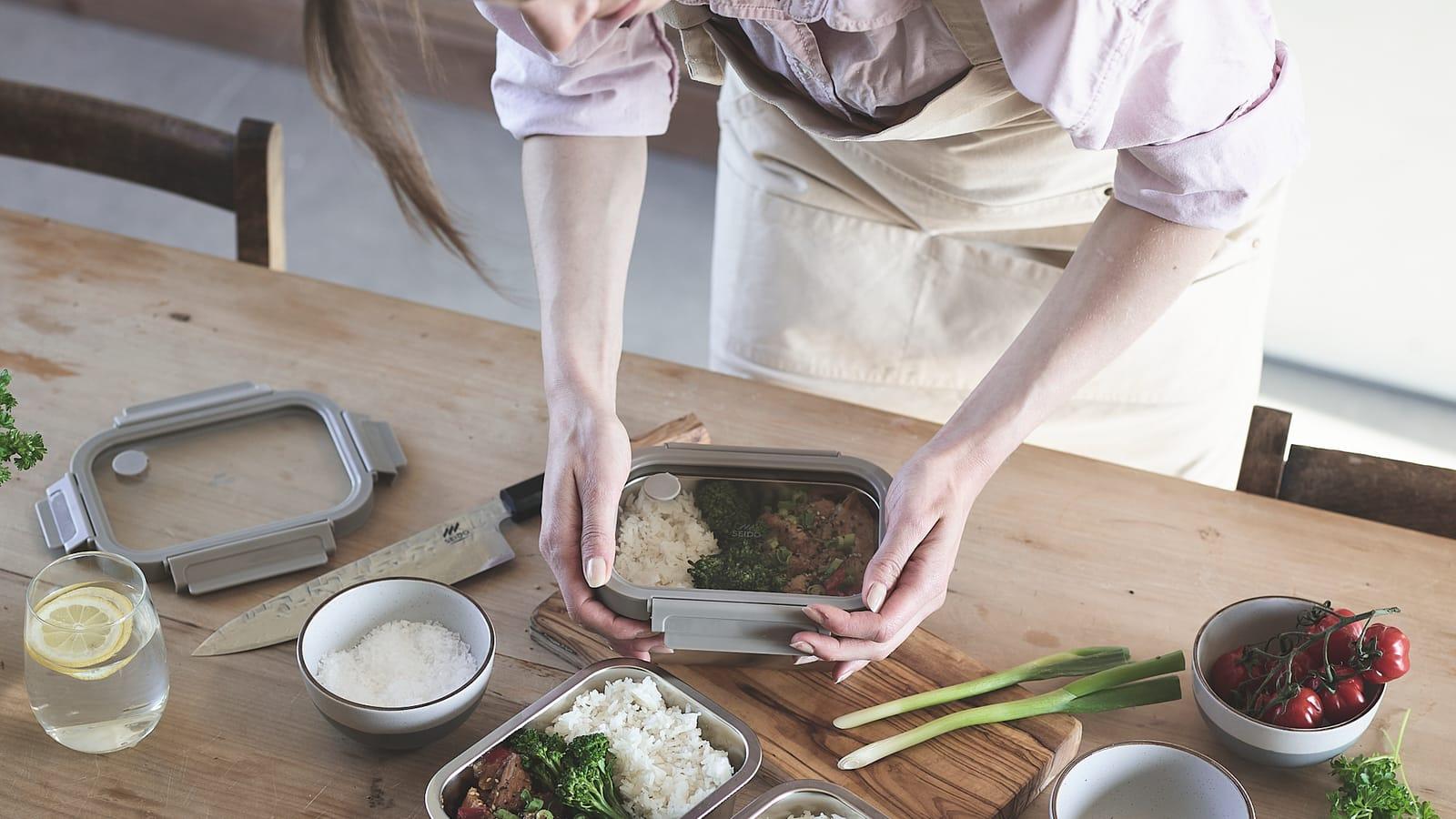
US law names nine major food allergens: milk, eggs, fish, crustacean shellfish, tree nuts, peanuts, wheat, soybeans and sesame. The most common in US adults are shellfish, milk and peanuts.
Most pan cooking adapts with a few swaps: cornstarch instead of flour to thicken, oil instead of butter to sear and baste, coconut aminos instead of soy sauce, and seeds instead of nuts. Below are the facts, the swaps, and which of our recipes is made without what.
What are the nine major food allergens in the US?
The Food Allergen Labeling and Consumer Protection Act of 2004 named eight: milk, eggs, fish, crustacean shellfish, tree nuts, peanuts, wheat and soybeans. The FASTER Act added sesame as the ninth, effective January 1, 2023.
Packaged foods regulated by the FDA must name these allergens on the label, in the ingredient list or in a "Contains" statement. That label is the most important tool you have when you cook for someone with a food allergy.
Which food allergies are most common in US adults?
A national survey of 40,443 US adults, published in JAMA Network Open in 2019, estimated that 10.8% had a food allergy, while about 19% believed they did.
Nearly half of the adults with a food allergy had at least one that began in adulthood, so it is worth asking guests even if they have never mentioned one.
- Shellfish: 2.9% of US adults
- Milk: 1.9%
- Peanut: 1.8%
- Tree nut: 1.2%
- Fin fish: 0.9%
Is lactose intolerance the same as a milk allergy?
No. Lactose intolerance is trouble digesting lactose, the natural sugar in milk. A milk allergy is an immune system reaction to proteins in milk.
That difference matters in the kitchen: lactose-free milk is still cow's milk with the lactose broken down, so it can suit lactose intolerance but not a milk allergy. Recipes made without milk, like our dairy-free steak, suit both.
What does gluten-free mean?
Gluten is a protein found in wheat, barley and rye. In celiac disease it triggers an immune reaction that damages the small intestine.
On a packaged food in the US, "gluten-free" is defined by the FDA: among other conditions, the food must contain less than 20 parts per million of gluten. Look for that label on stock, sauces and starches when you cook gluten-free. A wheat allergy is different again: wheat is on the list of nine, while barley and rye are not.
Cornstarch or flour: which should you use to thicken a sauce?
Cornstarch is pure starch made from corn. Flour contains starch and gluten, so it has less thickening power: it takes about 2 tablespoons of flour per cup of liquid to do what 1 tablespoon of cornstarch does. A cornstarch sauce turns glossy and clear; a flour sauce is cloudy and opaque.
Stir cornstarch into cold water before it goes in, add it near the end, and simmer only until the sauce turns glossy. Arrowroot and potato starch are other starches that contain no gluten; follow the package for how much to use.
A word on names: in US stores, corn flour usually means finely ground whole corn, which will not thicken a sauce the way cornstarch does. In British recipes, "cornflour" means cornstarch.
Which swaps work for each allergen?
These are the swaps that work in a skillet. Every packaged swap needs its own label check: some plant-based butters contain soy or tree nuts, and some seed butters are made on lines shared with peanuts.
| Instead of | Use | How |
|---|---|---|
| Wheat flour, to thicken | Cornstarch (half as much), arrowroot or potato starch | Stir into cold water first; add near the end. |
| Wheat flour, to dredge | Rice flour or cornstarch | Gives a light, crisp coating. |
| Breadcrumbs | Breadcrumbs or panko labeled gluten-free | Read the label for eggs and milk too. |
| Soy sauce | Coconut aminos, or tamari labeled gluten-free | Most soy sauce contains wheat; tamari still contains soy. |
| Butter, to sear and baste | Avocado or olive oil | Ghee is made from butter, so it is still dairy. |
| Cream in a pan sauce | Stock, reduced | Deglaze the fond, reduce, and finish with olive oil. |
| Egg wash for a coating | A thin slurry of cornstarch and water | Brush it on before the crumbs. |
| Peanut butter | Sunflower seed butter | Check for shared-line warnings. |
| Nuts for crunch | Toasted sunflower or pumpkin seeds | Toast them in a dry skillet. |
| Sesame oil or tahini | A neutral oil, or sunflower seed butter | Tahini is made from sesame. |
| Fish sauce or Worcestershire sauce | Coconut aminos with a squeeze of lime | Worcestershire sauce usually contains anchovies. |
How do you avoid cross-contact when you cook?
Cross-contact is when an allergen gets into a food that was meant to be free of it, from a pan, a spoon, a board or hands. The allergy organization FARE advises cleaning with soap and water or with all-purpose cleaning agents.
- Cook the allergen-free dish first, then anything else.
- Wash the skillet, utensils and cutting board in hot, soapy water between dishes.
- Use a clean spoon for each jar, so a knife from the peanut butter never reaches the seed butter.
- Keep the labels of packaged ingredients until the meal is eaten, so you can check them again.
Which of our recipes is made without which allergen?
Each recipe lists the major allergens it is made without, as written. "Optional" means only an optional garnish carries it: leave the garnish off.
- Dairy-Free Pan-Seared Steak
Made without: milk, eggs, fish, crustacean shellfish, tree nuts, peanuts, wheat, soybeans, sesame.
- Gluten-Free Pan Sauce (Deglazing the Fond)
Made without: eggs, fish, crustacean shellfish, tree nuts, peanuts, wheat, soybeans, sesame. Leave off the optional garnish for: milk.
- Gluten-Free, Soy-Free Chicken Meal Prep
Made without: milk, eggs, fish, crustacean shellfish, tree nuts, peanuts, wheat, soybeans. Leave off the optional garnish for: sesame.
- Peanut-Free Chicken Bowls (Sunflower Sauce)
Made without: milk, eggs, fish, crustacean shellfish, tree nuts, peanuts, wheat, soybeans. Leave off the optional garnish for: sesame.
- Dairy-Free Garlic Asparagus
Made without: milk, eggs, fish, crustacean shellfish, tree nuts, peanuts, wheat, soybeans, sesame.
A note on labels and medical advice
A recipe is only as free of an allergen as the labels of the packaged ingredients that go into it, and labels change. Read every label every time. If you have a diagnosed food allergy or celiac disease, follow the advice of your allergist or doctor.
Frequently asked questions
- What are the nine major food allergens?
- Milk, eggs, fish, crustacean shellfish, tree nuts, peanuts, wheat, soybeans and sesame. Sesame became the ninth on January 1, 2023.
- What is the most common food allergy in US adults?
- Shellfish, at about 2.9% of US adults in a 2019 national survey, followed by milk (1.9%), peanut (1.8%), tree nut (1.2%) and fin fish (0.9%).
- Can I use corn flour instead of cornstarch?
- Not in the US: corn flour here is finely ground whole corn and will not thicken a sauce the same way. Use cornstarch, about half as much as you would use of all-purpose flour.
- Is coconut a tree nut?
- The FDA no longer lists coconut as a tree nut for allergen labeling. If coconut has caused you a reaction, avoid it and ask your allergist.
Cooking this way is what our stainless steel lunch box 3-pack is built for — 27 oz (800 ml) × 3, microwave-safe, dishwasher safe, 5-year limited warranty.
Sources
- U.S. Food and Drug Administration. Food Allergies: What You Need to Know
- PubMed Central, National Library of Medicine. Prevalence and Severity of Food Allergies Among US Adults (JAMA Network Open, 2019)
- National Institute of Diabetes and Digestive and Kidney Diseases. Definition & Facts for Lactose Intolerance
- National Institute of Diabetes and Digestive and Kidney Diseases. Definition & Facts for Celiac Disease
- Electronic Code of Federal Regulations. 21 CFR 101.91 — Gluten-free labeling of food
- University of Illinois Extension. For a good gravy, you need a thickening agent
- U.S. Food and Drug Administration. Frequently Asked Questions: Food Allergen Labeling Guidance for Industry
- Food Allergy Research & Education (FARE). Cleaning Methods
Links checked November 11, 2026.
More recipes and tips
- Gluten-Free Pan Sauce (Deglazing the Fond)
- Gluten-Free, Soy-Free Chicken Meal Prep
- Peanut-Free Chicken Bowls (Sunflower Sauce)
All recipes · Videos · Guides