What Size Skillet Do You Need?
Published July 31, 2026 · Updated September 17, 2026
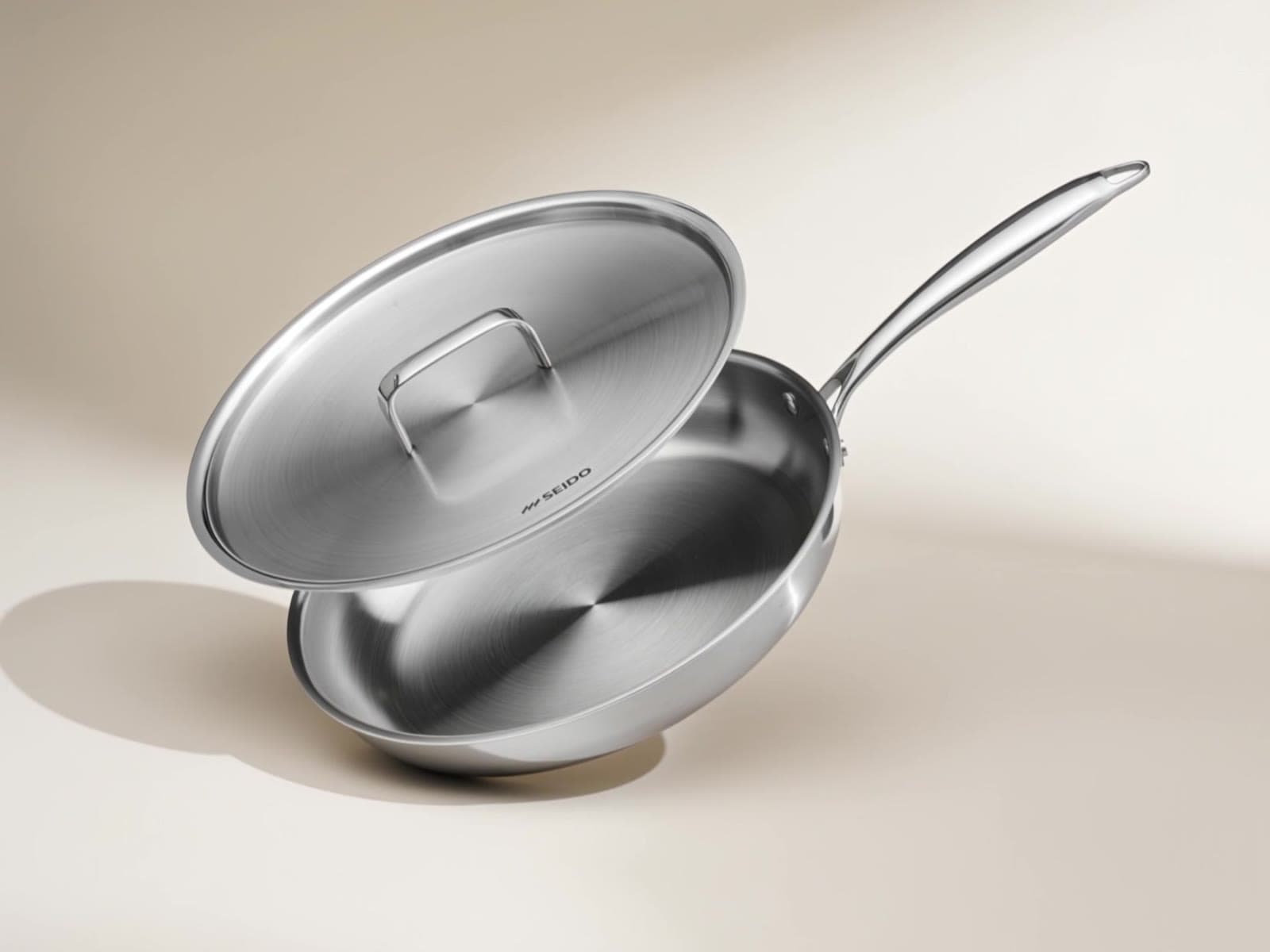
Choose skillet size by how many you cook for. An 8-inch (20 cm) skillet suits one person and eggs. A 9.5-inch (24 cm) skillet handles everyday cooking for one to two. An 11-inch (28 cm) skillet fits three or more servings, batch cooking, and larger proteins.
Skillet sizes are measured across the rim, not the cooking surface. Before buying, count the servings you cook on a typical night and measure your largest burner — a skillet sears evenly when its base roughly matches the burner beneath it.
How do you choose the right skillet size?
The real question behind skillet size isn't inches — it's servings. Count the plates you put on the table on an ordinary night, not the biggest dinner you host all year. One serving points to an 8-inch (20 cm) pan. One to two everyday servings point to a 9.5-inch (24 cm) pan. Three or more servings, or regular batch cooking, point to an 11-inch (28 cm) pan.
Size matters because of crowding. When food packs a pan too densely, it releases moisture faster than the heat can evaporate it. The pan's surface temperature drops, juices pool, and dinner steams instead of searing. No browning means no fond — the browned layer that builds flavor in the pan. A skillet with the right amount of open surface keeps temperature up and lets moisture escape.
The second constraint is your stove. A skillet browns evenly when its base roughly matches the burner under it. A pan far wider than the burner runs cool at the edges; a pan far smaller than the flame wastes heat up the walls. Measure your largest burner before you buy your largest pan.
Skillet size chart: what does each size actually do?
Here's the size map in plain terms. Sizes are rim diameters — the industry-standard way skillets are labeled — with the metric equivalent alongside.
One useful rule sits underneath the chart: the labeled size is the rim, but the flat cooking surface at the base is always smaller, because skillet walls slope outward. Two pans with the same rim label can offer different cooking areas depending on how steeply those walls flare.
- 8 in (20 cm) — the single-serving pan. Typical use: fried eggs, an omelet, a toasted sandwich, toasting nuts and spices, reheating one portion. Servings: 1.
- 9.5 in (24 cm) — the everyday pan. Typical use: weeknight dinners, two pieces of protein with room to sear, pan sauces, hash, a stir-fry for two. Servings: 1–2.
- 11 in (28 cm) — the batch pan. Typical use: steaks seared side by side, one-skillet dinners, browning for stews and braises, cooking for a full table. Servings: 3+.
Shopping for a 10-inch skillet?
A quick honest note: we don't make a 10-inch skillet. The closest size is the 9.5-inch (24 cm) — half an inch narrower at the rim. Whether that matters depends on what the 10-inch label was doing for you.
Half an inch of rim diameter is a smaller difference than it sounds. Because labeled sizes measure the rim, the usable cooking surface is set by the base and the wall slope — and wall slope varies more from brand to brand than half an inch of rim does. A 9.5-inch pan from one maker can cook a great deal like a 10-inch pan from another.
So decide by role, not by label. If a 10-inch pan was going to be your do-everything skillet for one or two people, a 9.5-inch (24 cm) pan covers that job. If you wanted a 10-inch pan as the big pan for a household of three or more, step up to an 11-inch (28 cm) instead — the extra surface is what prevents crowding when every serving hits the pan at once.
Shopping for a 12-inch skillet?
Our largest skillet is the 11-inch (28 cm), and it's fair to say a 12-inch pan genuinely suits some households: four or more servings on a routine night, weekly batch cooking, or one-pan meals where everything cooks together. If that's your kitchen, a bigger pan is a legitimate choice.
But check your stove before you commit. A very wide pan only browns evenly when the burner can drive its whole base. On a typical home burner, the edges of an oversized pan run cooler than the center, which shows up as pale rings on pancakes and uneven color on seared meat. If the edges of your current large pan already run cool, going wider won't fix dinner — it'll just spread it thinner.
For three-to-four-serving cooking, an 11-inch (28 cm) skillet typically stays within what a standard home burner can heat evenly, while still holding steaks side by side without crowding. Measure your largest burner and the flat base of the pan you own now; let those two numbers, not the label, make the call.
Should you buy one skillet or two?
If you're buying one pan: choose the 9.5-inch (24 cm) if you cook for one or two, and the 11-inch (28 cm) if you regularly cook for three or more. A single well-chosen skillet earns its burner space every day.
If you're buying two, skip the middle and pair the ends: an 8-inch (20 cm) and an 11-inch (28 cm). The small pan handles eggs, single portions, and quick reheats; the large pan handles dinner at scale. Two pans also let you run components in parallel — protein in the big skillet, a sauce or vegetables in the small one — which is how one-pan recipes quietly become faster two-pan dinners.
The honest buying rule: size the pan for the meals you cook weekly, not the gathering you host twice a year. A skillet that matches your real routine gets used, gets familiar through practice, and makes the next purchase obvious.
Where do SEIDO skillet sizes fit?
SEIDO skillets come in exactly the three sizes this guide maps: 8-inch (20 cm) for single servings, 9.5-inch (24 cm) for everyday cooking for one to two, and 11-inch (28 cm) for three or more servings and batch cooking.
All three share one construction, so the choice really is size alone. Each skillet is uncoated, with a tri-ply clad body: a 304 (18/8) stainless steel cooking surface, an aluminum core and a 430 stainless steel exterior. The skillets are made without intentionally added PFAS and without synthetic coatings. With no coating on the cooking surface, there's no layer to wear away — durability rests on the steel itself, and every skillet is backed by a 5-Year Limited Warranty. SEIDO skillets are sold in the US on Amazon.
Start from your servings count: the 8-inch skillet page if you mostly cook for one, the 9.5-inch skillet page if you feed one to two most nights, and the 11-inch skillet page if your table seats three or more.
What makes a good stainless steel skillet?
The best stainless steel skillet for you is the one whose construction matches how you cook. These are the points worth checking on any listing, whichever brand you buy.
Steel grade. Food-contact stainless steel is usually a 300-series grade such as 304, often labeled 18/8 or 18/10. The two numbers are the approximate percentages of chromium and nickel. Chromium forms the thin oxide layer that makes stainless steel resist corrosion. Nickel adds to that corrosion resistance and helps the steel keep its bright finish.
Body construction. Stainless steel is a relatively poor conductor of heat, so most stainless skillets pair it with a more conductive metal such as aluminum or copper. A clad pan bonds that core through the base and up the walls; tri-ply is the common three-layer version, with steel on both faces and aluminum between them. A disc-base pan attaches a conductive disc to the underside only, so the walls heat more slowly than the floor. Both designs work. Clad bodies tend to heat the sides more evenly, which matters most for sauces and wide pans.
Cooktop fit. Induction cooktops only heat pans with a magnetic base. Not every stainless steel is magnetic, so check the maker's stated cooktop compatibility rather than assuming it.
Handle and lid. Riveted handles are a durable, common choice; check that the handle angle keeps your hand clear of the heat. A fitted lid holds in moisture for steaming vegetables, finishing thick cuts, or keeping food warm, which is why many shoppers look for a stainless steel skillet with a lid included.
Weight and balance. Heavier is not automatically better. A pan should feel steady on the burner and still be comfortable to lift and tilt with one hand when it is full.
Should you buy a stainless steel skillet set or sizes separately?
A set is convenient when you know you will use every piece. It gives you matching handles, lids, and construction in one purchase.
Buying sizes separately lets you skip a diameter you would never reach for, and you store only the pans you use. It also lets you add a size later, once your routine shows a gap.
Either way, compare pieces, not piece counts. Some sets count lids as separate pieces, so a set described by its number of pieces may hold fewer pans than it first appears. Check which skillet diameters are included, and whether each one does a job the others do badly.
A three-size range only earns its storage space when each pan has a distinct role:
- 8 in (20 cm): eggs, an omelet, one portion, toasting spices or nuts
- 9.5 in (24 cm): weeknight cooking for one to two, pan sauces
- 11 in (28 cm): searing two steaks at once, batch browning before a braise, three or more servings
Cooking this way is what our 9.5-inch stainless steel skillet is built for — 9.5 in (24 cm), tri-ply clad, oven-safe, 5-year limited warranty.
Frequently asked questions
- What size skillet do I need for a family of four?
- An 11-inch (28 cm) skillet. Four servings need enough open surface to sear without crowding — when food packs a pan too tightly, temperature drops and food steams instead of browning. Pairing the 11-inch with an 8-inch (20 cm) covers eggs and single portions without heating the big pan.
- What size skillet is best for eggs?
- An 8-inch (20 cm) skillet. Two or three eggs stay contained, so the whites hold together instead of spreading thin and overcooking at the edges before the centers set. The smaller surface is also easier to control for folding an omelet or sliding eggs onto a plate.
- Do skillet sizes measure the rim or the base?
- The industry standard is rim diameter — measured straight across the top of the pan from outside edge to outside edge. The flat cooking surface at the base is always smaller, because skillet walls slope outward. That's why two pans with the same labeled size can have noticeably different cooking areas.
- Is a 9.5-inch skillet big enough for two people?
- Yes, for everyday cooking. A 9.5-inch (24 cm) skillet holds two portions of protein with room to sear, a stir-fry for two, or a pan sauce without crowding. Step up to an 11-inch (28 cm) skillet when you regularly cook three or more servings or batch cook for the week.
- 11 inch vs 12 inch skillet: does one inch matter?
- Somewhat. Measured at the rim, a 12-inch (30 cm) circle has roughly a fifth more area than an 11-inch (28 cm) circle. The flat base of each pan is smaller than the rim, and wall slope varies by brand, so the real difference in cooking surface can be larger or smaller. A 12-inch pan also needs a wider burner to heat its base evenly; see the section above on shopping for a 12-inch skillet.
- Is an 11-inch skillet big enough for two steaks?
- Usually, yes. An 11-inch (28 cm) skillet holds two average steaks side by side with space between them. That space lets moisture escape, so the surface stays hot enough to brown. Very large cuts may need to be seared one at a time.
- Do you need a lid for a stainless steel skillet?
- Not for searing or sautéing, which need moisture to escape. A lid is useful for steaming vegetables, cooking eggs through on top, finishing thick cuts over lower heat, and keeping food warm. A skillet sold with its own fitted lid saves searching for one that sits flat on the rim.
Browse all stainless steel frying pans or keep reading: How to Cook Eggs on Stainless Steel Without Sticking · Why Food Sticks to Stainless Steel Pans · Stainless Steel vs Nonstick Pans.