Stainless Steel Skillets on Gas, Glass-Top and Induction Stoves
Published September 17, 2026
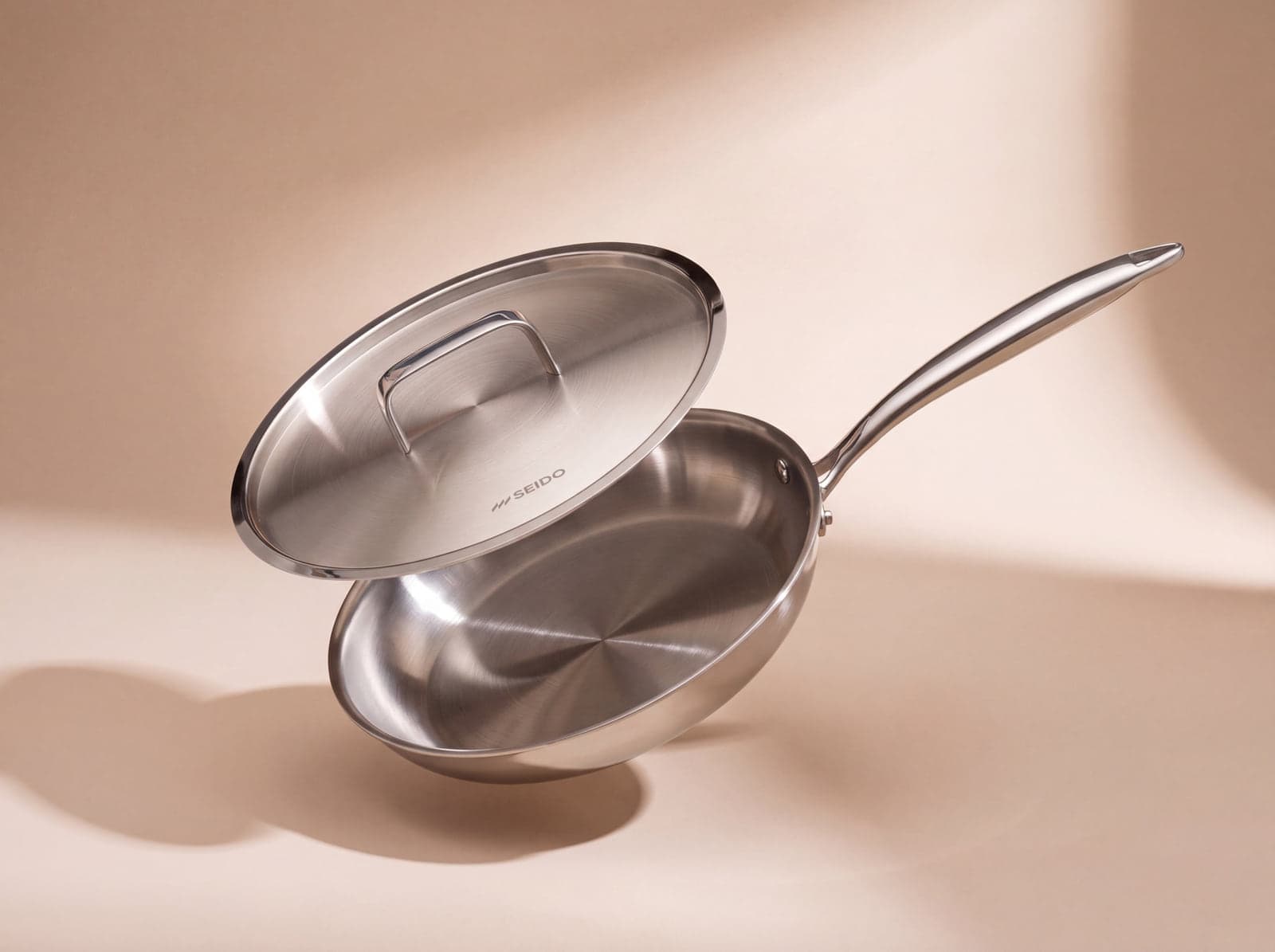
A stainless steel skillet can cook on gas, radiant glass-top or induction stoves if its base suits the stove. Gas needs a flame sized to the base. A glass-top needs a flat, clean base in full contact with the glass. Induction needs a magnetic exterior, which a fridge magnet confirms in seconds.
How does each type of stove heat a pan?
Each stove gets heat into the pan by a different route. A gas burner heats the base with hot combustion gases. A radiant glass-top has an electric element under a glass-ceramic plate; the plate gets hot, and heat passes into the pan wherever the base touches it. An induction cooktop has a coil under the glass that creates a rapidly switching magnetic field. That field induces electrical currents in a magnetic base, and the base itself becomes the source of heat.
Stainless steel is a poor conductor of heat. Aluminum conducts heat more than ten times faster. A pan made of stainless steel alone runs hot over the burner and cooler everywhere else. That is why much of the stainless cookware category uses cladding: an aluminum core bonded between two layers of stainless steel, usually called tri-ply. The inner layer is the cooking surface. The aluminum spreads heat sideways. The outer layer faces the stove, and on induction its grade decides whether the pan heats at all.
Can you use a stainless steel skillet on a gas stove?
Yes. Gas is the least demanding of the three stoves. The base does not need to be magnetic, and it does not need perfect contact, because the flame reaches it directly. The skill on gas is sizing the flame.
Keep the flame under the base. Flame that climbs the sides of the skillet heats the sidewalls instead of the food. It also heats the handle and leaves blue or gold heat tint on the outside of the pan. Turn the burner down until the flame tips sit beneath the base, not around it.
Construction shows on gas. A disc-bottom pan has its aluminum only in a plate under the base, so the walls are single-layer steel and can scorch where flame reaches them. A fully clad pan carries its core up the walls, so heat that reaches the sides spreads out.
Treat the handle as hot. Metal handles conduct heat, and a wide flame heats them directly. Keep a dry pot holder or oven mitt within reach every time you cook.
Can you use a stainless steel pan on a glass top stove?
Yes. A stainless steel pan with a flat, smooth base suits a radiant glass-top stove. The element heats the pan through the glass, so heat moves best where the base sits flat against it. A base that rocks or bows touches the glass only at its high points and cooks unevenly.
Size the pan to the element. A base much wider than the element leaves a cooler outer band. A base much smaller leaves part of the element heating bare glass. Get the two as close in diameter as you can.
- Lift the pan; don't slide it. Grit trapped under a moving base is what scratches glass-ceramic.
- Wipe the base before it goes on the stove. Burnt residue under the pan can mark the glass.
- Set the pan down gently. The weight of a skillet is not the risk; a dropped pan is.
- Clean sugary spills promptly, following your cooktop manufacturer's instructions. Sugar left to cool on glass-ceramic can pit the surface.
- Remember that radiant elements stay hot after you switch them off. To stop cooking quickly, move the pan off the element.
Do stainless steel pans work on induction cooktops?
Only when the base is magnetic. An induction cooktop can heat a pan only if its field can induce currents in the base, and that needs a ferromagnetic material. Cast iron, carbon steel and ferritic stainless steels such as 430 qualify. The 304 (18/8) grade used for cooking surfaces is austenitic, and in its normal state it is essentially non-magnetic. A pan made entirely of 304 will not heat on induction.
Clad pans designed for induction solve this at the outer layer. The cooking surface stays 304 for its corrosion resistance. The layer facing the cooktop is made from a magnetic grade such as 430, and that is the layer the cooktop heats.
The fridge-magnet test settles the question for any pan you own. Hold an ordinary magnet to the underside. If it clings firmly, the base has a magnetic layer. If it slides off, an induction cooktop will not detect the pan. The magnet reads the material only. How evenly a pan cooks on induction also depends on its flatness, its base diameter and the cooktop itself.
Induction changes timing more than technique. Most cooktops will not switch on for a base smaller than their minimum pan size. Heat builds very quickly, so an empty skillet on a high setting can overheat in moments. Preheat on a medium setting and stay with the pan.
Before using any skillet on induction, including one you already own, run the magnet test and check the cooktop maker's minimum pan size.
How do you care for a stainless steel skillet on each stove?
Most care is the same on every stove. Let the pan cool before it meets water, wash it with dish soap and a soft sponge, and dry it. A few habits depend on the stove.
- Gas: blue, gold or rainbow marks on the sides are heat tint, a thin oxide film on the steel. The tint is cosmetic, and a stainless steel cleaner or a little white vinegar usually removes it.
- Glass-top: keep the base spotless and check it for flatness now and then on a level countertop. A pan that spins or rocks will cook unevenly on glass.
- Induction: never leave an empty pan on a high setting. A faint hum at high power is common with clad pans and usually fades when you turn the setting down.
- Every stove: don't plunge a hot pan into cold water. The sudden temperature change can warp a base, and a warped base loses contact on glass and induction.
How do you know a stainless steel skillet is preheated on any stove?
The water test works on all three. Heat the dry skillet on a medium setting, then flick in a few drops of water. When the drops bead and glide instead of hissing away, the surface is hot enough for food to release. Induction gets there sooner and a radiant glass-top gets there later. Gas and induction also respond within seconds when you change the setting, while a radiant element keeps heating for a while after you turn it down.
Our Sear Series skillets come in 8 in (20 cm), 9.5 in (24 cm) and 11 in (28 cm), each sold with a lid. The cooking surface is uncoated 304 (18/8) stainless steel, made without intentionally added PFAS and without synthetic coatings, and each skillet carries a 5-Year Limited Warranty. The 9.5 in (24 cm) is a practical first size for everyday cooking for one or two.
Cooking this way is what our 9.5-inch stainless steel skillet is built for — 9.5 in (24 cm), tri-ply clad, oven-safe, 5-year limited warranty.
Frequently asked questions
- Can you use a stainless steel pan on a glass top stove?
- Yes. A stainless steel pan with a flat, smooth base works well on a radiant glass-top stove because it sits in full contact with the glass. Lift the pan rather than sliding it, wipe the base clean before cooking, and choose a base close in diameter to the element for even heat.
- Will a stainless steel pan scratch a glass cooktop?
- A clean stainless steel base that is lifted, not dragged, is unlikely to scratch glass-ceramic. Scratches usually come from grit or burnt residue trapped under a pan that slides across the surface, or from rough-bottomed cookware. Wipe the base before cooking and set the pan down gently.
- How can I tell if a stainless steel pan will heat on induction?
- Hold a fridge magnet to the underside of the pan. If it clings firmly, the base contains a magnetic layer that an induction cooktop can heat. If it slides off, the base is non-magnetic stainless steel and the cooktop will not detect it. The test reads the material, not how evenly the pan will cook.
- Why is 304 stainless steel not magnetic?
- 304 (18/8) stainless steel has an austenitic crystal structure, which its nickel content stabilizes, and that structure is essentially non-magnetic. Ferritic grades such as 430 contain little or no nickel and are magnetic. That is why induction-ready clad pans pair a 304 cooking surface with a magnetic stainless exterior.
- Why does my stainless steel pan turn blue or rainbow-colored on a gas stove?
- That coloring is heat tint, a thin oxide film that forms on stainless steel at high temperatures and changes how light reflects from the surface. It is cosmetic. It usually appears where flame has climbed the sides of the pan, and a stainless steel cleaner or white vinegar usually removes it.
Browse all stainless steel frying pans or keep reading: How to Cook Eggs on Stainless Steel Without Sticking · Why Food Sticks to Stainless Steel Pans · Stainless Steel vs Nonstick Pans.