How to Clean Burnt-On Food From a Stainless Steel Pan
Published July 31, 2026 · Updated September 17, 2026
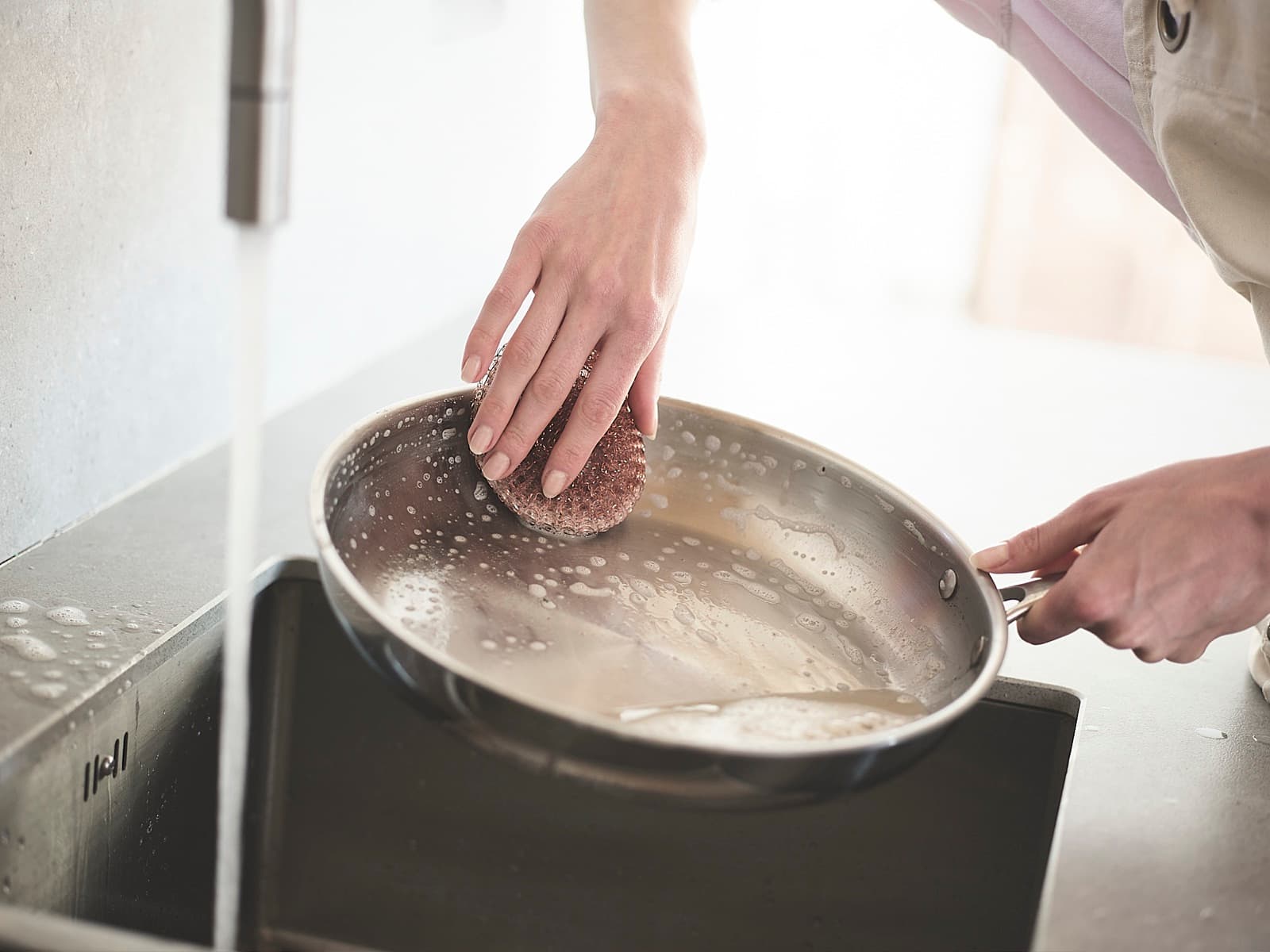
To clean burnt-on food from a stainless steel pan, deglaze it while it's still warm: pour in about a cup of water, let it steam, and scrape the softened residue loose with a wooden spoon. For stubborn burns, escalate to a dish-soap soak, a baking soda paste, or a simmer with baking soda.
Because uncoated stainless steel has no coating to protect, you can scrub as hard as the burn demands — a genuine advantage over coated pans, where every hard scrub shortens the coating's life.
What is the fastest way to get burnt-on food off a stainless steel pan?
The fastest fix is to deglaze the pan while it's still warm. Water hitting warm steel turns to steam, works into the burnt layer, and breaks its grip on the metal — the same physics cooks use to lift fond for a pan sauce. (Yes, the move that makes dinner better is also the one that saves you from scrubbing burnt rice at 11pm. Use it for both.)
It works because burnt-on food is mostly carbonized oil and protein bonded to the surface. Steam plus gentle scraping undoes that bond while it's fresh. The longer a burn sits and cools, the harder it grips — which is why the rest of this guide is an escalation ladder.
- Take the pan off the burner and let it cool for a minute or two — warm, not scorching.
- Pour in about 1 cup (240 ml) of water. It should sizzle gently, not erupt.
- Scrape with a wooden spoon or spatula as the water steams. Most of the burn lifts in under a minute.
- Pour off the water, wash with dish soap, rinse, and dry.
What should I do if burnt food still won't come off?
Work through these four steps in order. Each rung applies more chemistry and more time than the last, and most burns surrender by the second or third.
- Step 1 — Soak with dish soap. Fill the pan with hot water and a generous squirt of dish soap. Leave it for 30 minutes, or overnight for a serious burn. Surfactants in the soap creep under the edges of the burnt layer and loosen its hold.
- Step 2 — Baking soda paste. Mix roughly three parts baking soda to one part water, spread it over the residue, and let it sit for 15–20 minutes. Scrub with the rough side of a sponge. Baking soda is mildly alkaline and mildly abrasive: it helps loosen greasy and burnt residue so it lifts without harming the steel.
- Step 3 — Simmer water and baking soda. Cover the burnt area with water, add a few tablespoons of baking soda, and simmer for 10–15 minutes. Heat accelerates the same reaction. Let the pan cool slightly, then scrape with a wooden spoon.
- Step 4 — A dedicated stainless steel cookware cleaner. For the burn that survives everything above, use a powdered or cream cleaner made specifically for stainless cookware and follow the label. These pair a mild acid with fine abrasives and will restore the cooking surface.
What should you never use on a stainless steel pan?
Stainless steel tolerates aggressive cleaning, but two things work against the metal itself — and one habit works against the pan's shape.
- Chlorine bleach. Chlorides attack the invisible chromium oxide layer that makes stainless steel stainless, and prolonged contact can pit the surface. No burn needs bleach.
- Harsh scouring on polished exteriors. The cooking surface can take a hard scrub; a polished or brushed exterior finish is cosmetic and can dull under coarse pads. Use the gentler rungs of the ladder on the outside of the pan.
- Cold water in a scorching-hot pan. Deglazing a warm pan is fine — that's the method. Dousing a pan straight off high heat is thermal shock. Give it a minute or two first.
Can you scrub a stainless steel pan hard without ruining it?
Yes — and this is the quiet advantage of uncoated stainless steel. On a coated pan, the cleaning instructions protect the coating, not you: soft sponges only, because every hard scrub wears the surface layer that does the cooking. Once a coated pan burns, you're stuck choosing between an incomplete clean and a shorter coating life.
Uncoated stainless has nothing to flake, peel, or scrub off. Its corrosion resistance comes from a chromium oxide layer that re-forms on exposure to air, so scrubbing through that layer doesn't leave the surface unprotected. Scrub the burn, not your options.
That's the design premise behind SEIDO skillets. They're uncoated, with a 304 (18/8) stainless steel cooking surface, made without intentionally added PFAS and without synthetic coatings — so a hard scrubbing session ends with a clean pan, not a worn one. The 8-inch (20 cm), 9.5-inch (24 cm), and 11-inch (28 cm) skillets are backed by a 5-Year Limited Warranty and sold in the US on Amazon; you can compare all three in our pans hub.
Is the rainbow or brown discoloration on my pan damage?
No. Rainbow blues and golds — heat tint — appear when the thin oxide layer on the surface thickens with heat, and light reflecting off its top and bottom surfaces interferes to produce color. It's cosmetic, common on stainless pans used over high heat, and it doesn't change how the pan cooks. A wipe with diluted white vinegar often removes light tint, and an oxalic acid cleanser handles more stubborn tint; rinse and dry afterward. Heat tint has enough physics behind it to deserve its own article, so we cover it in full elsewhere in the learn library.
How do I keep food from burning onto stainless steel next time?
Burnt-on food is almost always a heat-management story, not a pan story. Golden-brown residue — fond — is flavor waiting for a splash of liquid. Black residue is carbon. The skill is deglazing before the first becomes the second.
Three habits prevent most burns: preheat the dry pan before adding oil, so food contacts a hot, ready surface; keep the burner at medium for most cooking, because a stainless pan holds heat well and overshoots quickly at high settings; and leave proteins alone until they release naturally — food that's still sticking is telling you it isn't done searing. When fond starts darkening past deep brown, add liquid and scrape. You get a sauce instead of a scrubbing session.
How do you clean a stainless steel pan every day?
Most stainless steel pans never need more than warm water, dish soap, and a sponge. The everyday routine is short, and doing it right after cooking is what keeps burns from building up.
Residue comes off most easily while the pan is still warm. Oil left on the surface and heated again slowly turns into a sticky, amber film, so a quick wash after each use saves a long scrub later.
- Let the pan cool until it is warm, not scorching.
- Rinse out loose food, then add a splash of hot water and scrape any fond with a wooden spoon.
- Wash with dish soap and the soft or rough side of a sponge.
- Rinse well and dry with a towel. Drying by hand prevents white water spots from minerals in tap water.
Can you use Bar Keepers Friend on stainless steel cookware?
Yes. Bar Keepers Friend is a powdered cleanser sold for stainless steel, and its active ingredient is oxalic acid. Oxalic acid dissolves the thin mineral and oxide films that soap cannot shift: heat tint, water spots, and rust-colored marks. A fine abrasive in the powder does the physical work on stuck residue.
It is the right tool for stains and films. It is not a first step for a thick layer of burnt food. Soften that first with a deglaze, a soak, or baking soda, then use the cleanser on what is left.
Rinse thoroughly. Oxalic acid should not be left on the surface or on your skin, and the label directions on contact time and gloves are worth following exactly. Never mix it with chlorine bleach or other cleaners.
- Wet the pan and sprinkle a small amount of powder onto the stained area.
- Work it into a paste with a damp sponge or soft cloth, rubbing in the direction of any brushed grain.
- Keep contact time short, as the label directs.
- Rinse the pan completely, wash with dish soap, rinse again, and dry.
How do you get brown stains off stainless steel pans?
Brown marks on stainless steel are not all the same thing, and each kind has its own fix. Look at the texture first. Something raised or sticky is residue sitting on the steel. Something perfectly smooth, with color you cannot feel, is a film in the surface oxide layer.
- Sticky amber or brown film: polymerized oil, formed when cooking oil is heated repeatedly and not fully washed off. A baking soda paste and a firm scrub remove it; Bar Keepers Friend handles what remains.
- Black or dark brown crust: carbonized food. Work through the steps at the top of this page.
- Smooth gold, blue, or rainbow tint: heat tint, covered in the discoloration section below.
- Chalky white spots or rings: mineral deposits from hard water or starchy cooking water. Wipe with diluted white vinegar, rinse, and dry.
- Small orange-brown specks: often rust from iron particles left behind by steel wool. See the next section.
Can you use steel wool on a stainless steel pan?
It is better to avoid ordinary steel wool, which belongs on the same list as the bleach warning above. Standard steel wool is plain carbon steel, and fine fragments can lodge in the surface and rust, leaving orange specks that look like the pan is corroding. The stainless steel itself is not rusting; the embedded iron is.
For how hard you can scrub, and with what, see the next section. If steel wool has already left specks, an oxalic acid cleanser such as Bar Keepers Friend dissolves them.
Cooking this way is what our 11-inch stainless steel skillet is built for — 11 in (28 cm), tri-ply clad, oven-safe, 5-year limited warranty.
Frequently asked questions
- Will scrubbing ruin a stainless steel pan?
- No. An uncoated stainless steel pan has no coating to scrub off, so aggressive cleaning removes the burn, not the pan. The steel resists staining and everyday abrasion; at most, hard scrubbing leaves fine cosmetic marks that don't change how the pan cooks.
- Why did food burn onto my stainless steel pan?
- Almost always heat management. The pan was too hot, there was too little fat, or the food was moved before it released naturally. Preheat the pan, add oil before the food, keep the burner at medium for most cooking, and deglaze fond before it darkens past deep brown.
- Is the rainbow discoloration on stainless steel damage?
- No. Rainbow or golden-brown discoloration is heat tint — a thin surface oxide layer that thickens with heat and refracts light. It's cosmetic, common on stainless steel used over high heat, and light tint usually wipes away with diluted white vinegar followed by a rinse and dry; heavier tint may need an oxalic acid cleanser.
- Can baking soda scratch stainless steel?
- No. Baking soda is a mild abrasive far softer than stainless steel, which is why it lifts carbonized residue without marking the cooking surface. That makes it the safe middle rung of the cleaning ladder — stronger than a soap soak, gentler than a dedicated stainless cleaner.
- How do you clean a stainless steel pan with baking soda?
- Mix about three parts baking soda to one part water into a paste, spread it over the residue, and leave it for 15 to 20 minutes. Scrub with the rough side of a sponge, rinse, wash with dish soap, and dry. For a heavy burn, simmer water with a few tablespoons of baking soda in the pan first.
- Is Bar Keepers Friend safe on stainless steel pans?
- Yes, when used as the label directs. Its oxalic acid dissolves heat tint, water spots, and rust-colored marks, and its fine abrasive lifts stuck residue. Keep contact time short, wear gloves if the label advises it, rinse the pan thoroughly, and never mix it with bleach.
- What is the sticky brown film on my stainless steel pan?
- It is usually polymerized cooking oil. When a thin layer of oil is heated again and again without a full wash, it hardens into a sticky amber or brown film. A baking soda paste and a firm scrub with a sponge remove it, and a daily wash with dish soap keeps it from coming back.
Browse all stainless steel frying pans or keep reading: How to Cook Eggs on Stainless Steel Without Sticking · Why Food Sticks to Stainless Steel Pans · Stainless Steel vs Nonstick Pans.