Do You Need to Season a Stainless Steel Pan?
Published August 18, 2026
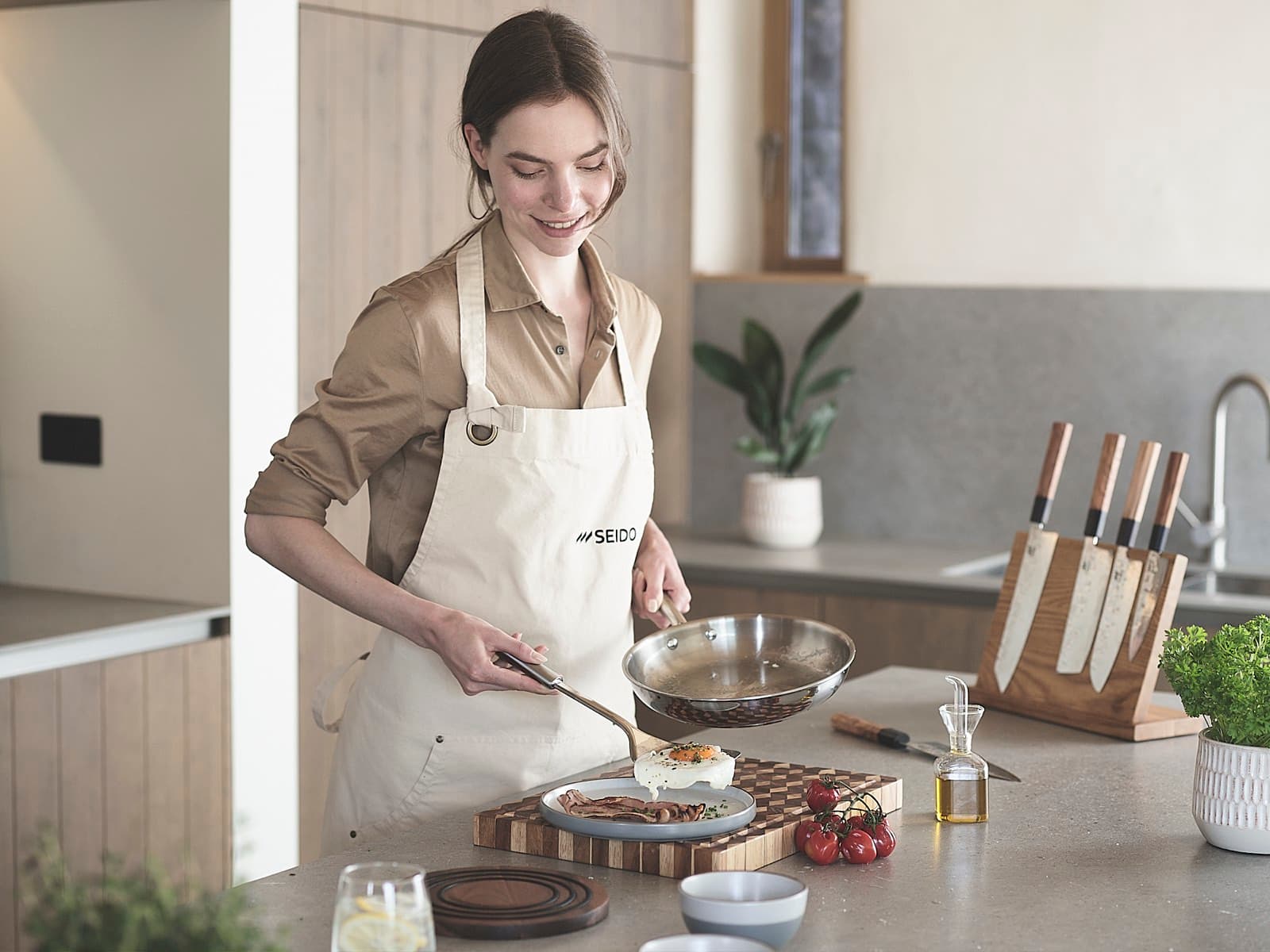
No. Stainless steel doesn't need seasoning the way cast iron does — its chromium oxide surface protects itself, and no baked-on oil layer is required for it to work. What stainless steel rewards instead is technique: proper preheating and the right amount of fat prevent sticking far more reliably than any seasoning ritual.
Do you need to season a stainless steel pan?
No — and understanding why clears up most stainless steel frustration. Seasoning exists to solve a cast iron problem: bare iron rusts, so cast iron gets coated with polymerized oil that protects the metal and builds a slick surface over years of use. Stainless steel doesn't have that problem. The chromium in 304 (18/8) stainless steel forms a thin, self-repairing oxide layer that protects the surface on its own — no oil coat needed, no ritual to maintain.
Some guides suggest seasoning stainless anyway, and a temporary oil layer can form. But it's exactly that — temporary. It washes off, wears unevenly, and chasing it means treating a stainless pan like something it isn't. The pan was designed to work bare.
If not seasoning, what stops food from sticking?
Preheating. Sticking on stainless steel is almost always a temperature problem, not a surface problem. Food pressed onto a cold-to-warm steel surface bonds to it; food placed on a properly preheated surface releases as a crust forms.
The routine that works: preheat the dry pan over medium heat for a couple of minutes; test with a few drops of water — when they bead into little balls that skate around the surface rather than flattening and hissing away, the pan's ready; add your fat, let it shimmer briefly, then add the food and leave it alone until it releases on its own.
That patience at the end matters as much as the preheat. Seared food clings while the crust builds, then lets go. Pull it early and you tear it; wait, and it releases cleanly.
How do you keep a stainless steel pan in good shape?
This is the everyday advantage of an unseasoned, uncoated surface: nothing on it needs protecting. Scrub hard with a scouring pad, soak off the stuck bits, use metal utensils. There's no seasoning to strip and no coating to scratch — the same steel is there after every wash, and the water-drop preheat test works the same on wash two hundred as on wash one.
Our Sear Series skillets are built on exactly this principle: an uncoated 304 (18/8) stainless steel cooking surface that asks for two minutes of preheating instead of a lifetime of upkeep.
Cooking this way is what our 9.5-inch stainless steel skillet is built for — 9.5 in (24 cm), tri-ply clad, oven-safe, 5-year limited warranty.
Frequently asked questions
- Why does food stick to my stainless steel pan?
- Almost always because the pan wasn't fully preheated before the food went in, or the food was moved before a crust formed. Preheat the dry pan over medium heat until water drops bead and skate, add fat, then let food release on its own — sticking largely disappears with that routine.
- Can you ruin a stainless steel pan by not seasoning it?
- No. Stainless steel is self-protecting — the chromium oxide layer reforms on its own. There's nothing to ruin by skipping a seasoning step, because the pan was never meant to have one.
- Is a seasoned cast iron pan better than stainless steel?
- They're different tools. Cast iron holds heat well and brings its seasoned surface; stainless steel is lighter, faster to respond to heat changes, needs no upkeep ritual, and cleans without worrying about stripping anything. For searing plus pan sauces plus easy maintenance, stainless is the practical daily choice.
Browse all stainless steel frying pans or keep reading: How to Cook Eggs on Stainless Steel Without Sticking · Why Food Sticks to Stainless Steel Pans · Stainless Steel vs Nonstick Pans.