Can You Put a Stainless Steel Pan in the Oven?
Published August 18, 2026
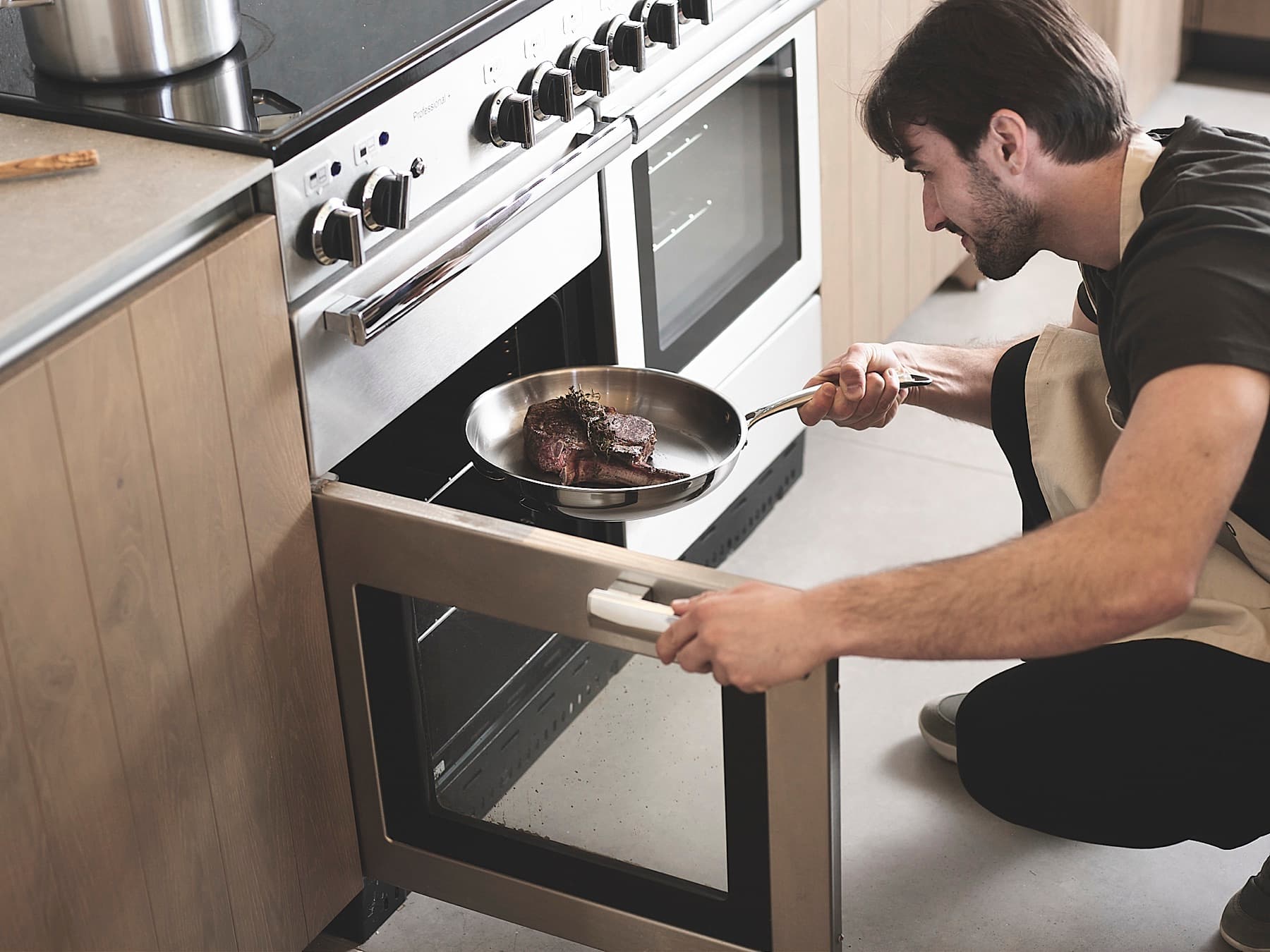
Generally, yes — an uncoated stainless steel pan is the simplest oven case there is, because there's no nonstick coating to degrade. What limits most pans in the oven isn't the steel: it's coatings, plastic or wooden handles, and lids. SEIDO Cookware's Sear Series skillets are oven-safe, with nothing applied to the cooking surface that heat could damage.
Are stainless steel pans oven-safe?
Stainless steel itself handles oven heat comfortably — professional kitchens have moved steel pans between stovetop and oven for as long as both have existed. When a pan is NOT oven-safe, the reason is almost never the steel. It's the other materials: a nonstick coating with a temperature ceiling, a handle with plastic or wooden parts, a lid with polymer fittings.
That's why the honest answer has two parts. The material answer: uncoated stainless steel is oven-ready by nature. The product answer: always go by the manufacturer's designation for the specific pan, because only the maker knows what every component is made of. If a pan is sold as oven-safe, it is. If the maker is silent, check what the handle and lid are made of before assuming.
Our Sear Series skillets are designated oven-safe by design: the cooking surface is uncoated 304 (18/8) stainless steel, so there's no coating for the oven to damage in the first place.
What actually limits a pan in the oven?
Three components decide any pan's oven rating, and none of them is the steel body:
- The coating. Nonstick coatings are the most common oven limitation — they degrade with high heat, which is why coated pans carry strict temperature ceilings. An uncoated pan removes this limit entirely.
- The handle. Plastic or wooden handles are the second limiter. All-metal construction is the stovetop-to-oven standard.
- The lid. Lids often carry lower ratings than the pans they cover — knobs, gaskets and fittings are the usual reason. When in doubt, send the pan in without its lid.
How do you cook from stovetop to oven?
The stovetop-to-oven handoff is the technique that justifies owning an oven-ready skillet. Sear meat hard on the stovetop to build a browned crust and the fond that becomes your pan sauce — then move the whole pan to the oven to finish cooking through gently. Thick cuts, roast chicken pieces, frittatas and skillet bakes all work this way.
One honest safety note: an all-steel handle comes out of the oven at oven temperature. Keep a dry towel or mitt over the handle from the moment the pan goes in — and leave it draped there as a reminder while the pan rests. (Everyone reaches for the bare handle exactly once.)
Cooking this way is what our 11-inch stainless steel skillet is built for — 11 in (28 cm), tri-ply clad, oven-safe, 5-year limited warranty.
Frequently asked questions
- What temperature can a stainless steel pan go to in the oven?
- Follow the specific manufacturer's rating — the limiting parts of any pan are usually coatings, handle materials and lids rather than the steel itself. An uncoated all-steel pan removes the most common limiter, the coating, which is why stainless is the standard choice for stovetop-to-oven cooking.
- Can the lid go in the oven too?
- Check the lid separately from the pan — lids are often rated lower because of knobs and fittings. If you don't have a clear answer from the maker, finish the dish in the oven without the lid.
- Why finish food in the oven instead of on the stovetop?
- The stovetop excels at browning; the oven excels at even, all-around heat. Searing first and finishing in the oven gives a hard crust without an overcooked band under the surface — restaurant technique, and the reason a skillet that can make the trip is worth owning.
Browse all stainless steel frying pans or keep reading: How to Cook Eggs on Stainless Steel Without Sticking · Why Food Sticks to Stainless Steel Pans · Stainless Steel vs Nonstick Pans.