Can You Cook Acidic Foods in Stainless Steel? Tomatoes, Wine and Pan Sauces
Published September 17, 2026
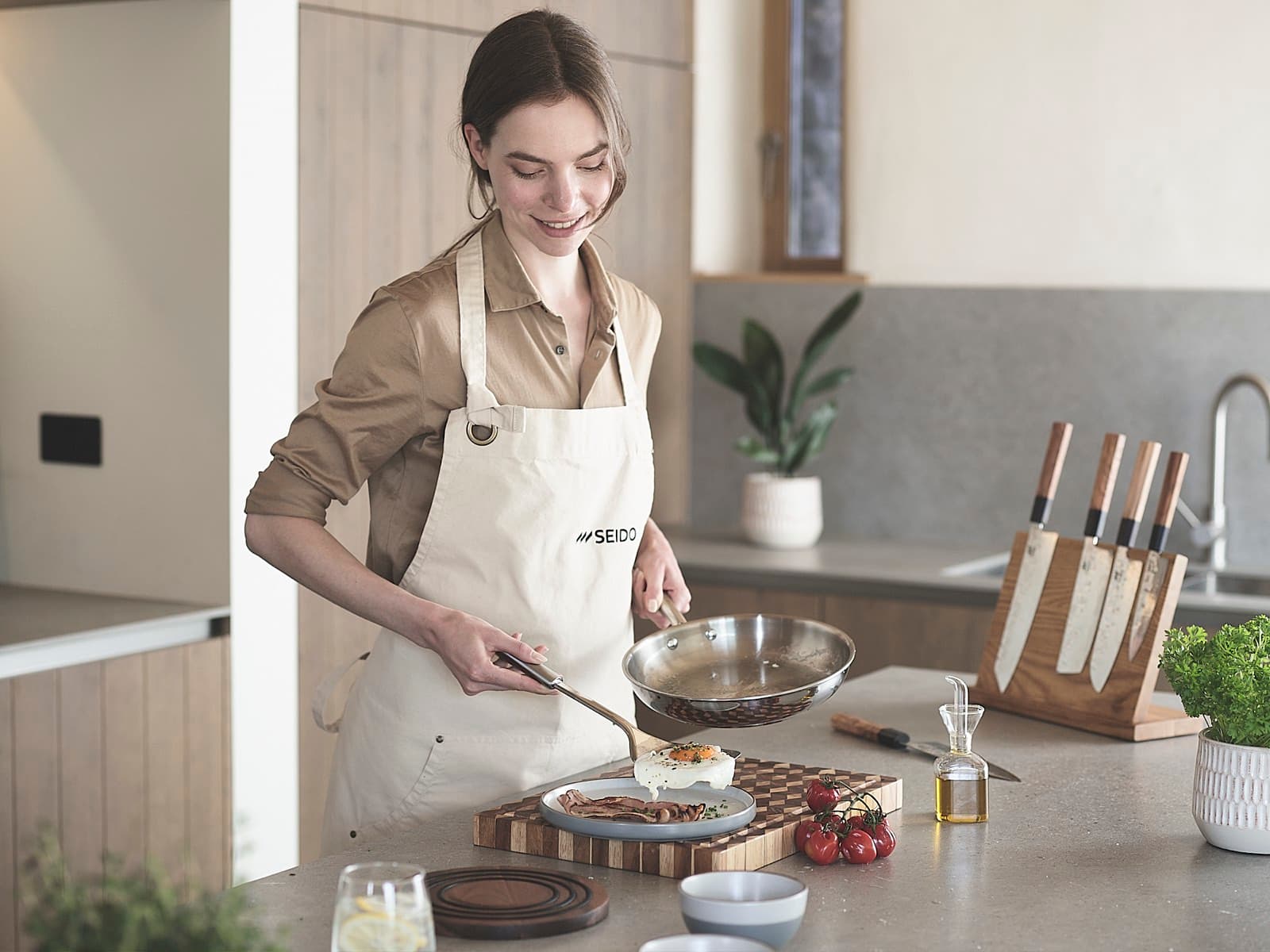
Yes. Stainless steel is one of the few bare metals suited to acidic cooking. Its chromium forms a thin oxide layer that shields the iron underneath, so tomato sauce, wine and citrus don't pit the pan or taste metallic the way they can in bare cast iron or uncoated aluminum.
What happens when acid meets stainless steel?
Stainless steel is iron alloyed with at least 10.5% chromium. When that chromium meets oxygen in the air, it forms a layer of chromium oxide only a few nanometers thick. This is called the passive layer, and it's why the steel doesn't rust in ordinary use.
The passive layer is stable against the mild acids found in food. Tomatoes, wine, vinegar and lemon juice can wear at it slightly during cooking, but the layer re-forms on its own as long as the surface is exposed to oxygen. There's no coating to scratch through and nothing that needs re-seasoning.
Compare that with reactive cookware. Acid can strip the seasoning from cast iron and dissolve some of the iron, which gives tomato sauce a metallic taste. Bare aluminum reacts too and can discolor light sauces. Stainless steel's passive layer is the reason acidic recipes so often call for a nonreactive pan, and stainless steel counts as one.
Does stainless steel leach into food?
A small amount can. Nickel and chromium are part of the alloy, and studies have measured traces of both moving into acidic food. A widely cited 2013 study in the Journal of Agricultural and Food Chemistry cooked tomato sauce in stainless steel pots and found that migration rose with longer cooking times. It also fell sharply over the first several cooking cycles as the new pans were used.
Those findings point to three practical factors: how acidic the food is, how long it stays in contact with the steel, and how new the surface is. A quick pan sauce made in a few minutes is a very different exposure from a tomato sauce simmered for many hours.
People who have been advised by a doctor to limit dietary nickel may prefer shorter cooks for acidic dishes, or a glass or enameled pot for all-day sauces. For most home cooks, stainless steel remains a standard choice for acidic cooking.
Is it safe to cook tomato sauce in a stainless steel pan?
Tomato sauce is one of the most common things cooked in stainless steel. The pan won't react with the sauce, won't discolor it, and won't add a metallic taste. A few habits keep both the pan and the sauce in good shape:
- Cook it, then move it. Transfer finished sauce to a storage container rather than leaving it in the pan overnight.
- Keep the heat steady. Sugary tomato paste scorches quickly on bare steel, so stir often over medium heat.
- Add salt once the liquid is hot. Undissolved salt sitting in a pan of cold liquid can cause small pits over time. Stirring it into hot liquid dissolves it quickly.
- Clean up the same day. Soak off stuck-on sauce with warm water rather than leaving it to sit.
How do you deglaze a stainless steel pan?
Deglazing is where acid does its best work in a stainless steel skillet. When you sear meat or brown vegetables, browned bits called fond stick to the pan. Fond is concentrated flavor, and a splash of liquid releases it into a sauce. Wine and vinegar work especially well because their acidity brightens the finished sauce.
Scraping fond off bare stainless steel with a wooden or metal spatula is part of the method. With no coating on the surface, there's nothing to damage.
- Sear the food, then lift it onto a plate. Leave the fond in the pan.
- Pour off all but about 1 tablespoon (15 ml) of fat. Add chopped shallot or garlic if you like, and stir for 30 seconds.
- Pour in your liquid, about 1/2 cup (120 ml) for a single skillet. It will steam and sizzle hard.
- Scrape the bottom right away while the liquid bubbles. The fond will loosen and dissolve.
- Simmer until the liquid has reduced by about half. This concentrates the flavor and cooks off the raw edge of wine.
- Finish off the heat. Stir in a pat of butter or a spoon of cream, season, and pour over the food.
Which pan sauces can you make in a stainless steel skillet?
Once you can deglaze, three sauces cover most weeknight cooking. Each one starts from the fond in the same skillet you seared in.
White wine and lemon: deglaze chicken or fish fond with dry white wine, reduce, then add a squeeze of lemon and cold butter off the heat. Add the lemon at the end so its flavor stays fresh.
Red wine and shallot: after searing steak or pork, soften a minced shallot, deglaze with red wine, reduce by half, add a splash of stock, and reduce again before finishing with butter.
Balsamic and mustard: deglaze pork chop or chicken fond with a little stock, add a spoon of balsamic vinegar and a teaspoon of Dijon mustard, and simmer briefly. Balsamic is sugary, so keep the heat moderate to stop it scorching.
All three take under ten minutes. The acid spends only a few minutes in the pan, which is well within everyday use.
Is it safe to store acidic food in stainless steel containers?
Storing food is different from cooking it. The food is cold, which slows chemical reactions, but it can sit against the steel for days rather than minutes. Refrigerated leftovers like chili, tomato pasta or a lemony grain salad are generally fine in a stainless steel container for the few days leftovers should be kept.
For longer storage of strongly acidic or very salty foods, such as pickles, citrus marinades or vinegar dressings kept for weeks, glass is the more cautious choice. Salt and acid together are harder on the passive layer than either one alone, and time adds to the effect.
Wash stainless containers soon after emptying them, and let them dry fully. A clean, dry surface exposed to air keeps the passive layer intact.
Choosing stainless steel for acidic cooking and storage
Look for an uncoated 304 (18/8) stainless steel cooking surface. The 18/8 refers to roughly 18% chromium and 8% nickel, a common food-contact grade of stainless steel. SEIDO skillets come in 8 in (20 cm), 9.5 in (24 cm) and 11 in (28 cm) sizes with a 304 (18/8) stainless steel cooking surface, sold with a lid and backed by a 5-Year Limited Warranty. The skillets are made without synthetic coatings, so there is no coating on the cooking surface to scrape through when you deglaze. For leftovers, SEIDO's lunch box 3-pack uses 27 oz (800 ml) stainless steel containers with a glass lid. The containers are dishwasher safe, handwash recommended, and lab-tested for microwave use with the lid off, up to 1000 W. See price on Amazon.
Cooking this way is what our 9.5-inch stainless steel skillet is built for — 9.5 in (24 cm), tri-ply clad, oven-safe, 5-year limited warranty.
Frequently asked questions
- Can I cook tomato sauce in a stainless steel pan?
- Yes. Stainless steel is nonreactive in everyday cooking, so tomato sauce won't discolor or taste metallic. Stir often over medium heat, and move finished sauce into a storage container instead of leaving it in the pan overnight.
- Does stainless steel leach nickel into food?
- Small amounts can move into acidic food, with more during long cooks and in new pans. One widely cited study found migration fell over the first several cooking cycles. People advised to limit dietary nickel may prefer shorter cooks for acidic dishes.
- Can I deglaze a stainless steel pan with wine or vinegar?
- Yes. Pour the liquid into the hot pan after searing, scrape up the browned fond, and reduce by about half. The acid is in contact with the steel for only a few minutes, and bare stainless steel has no coating to damage.
- Why does my stainless steel pan have white spots after cooking?
- White marks usually come from minerals in water or leftover starch. Rainbow or blue-gold marks are heat tint, a slightly thicker oxide layer that forms at high heat. Neither is damage. Wiping a little white vinegar over the cooled pan, then rinsing and drying it, usually removes mineral spots; heat tint may need an oxalic acid cleanser.
- Can I store leftovers with lemon or vinegar in stainless steel containers?
- For a few days in the fridge, yes. For weeks of storage of strongly acidic or salty foods, such as pickles or vinegar dressings, glass is the more cautious choice.
- Is stainless steel better than cast iron for acidic foods?
- For acidic dishes, yes. Acid can strip seasoning from bare cast iron and add a metallic taste. Stainless steel relies on a chromium oxide layer that re-forms on its own and needs no seasoning.
Browse all stainless steel frying pans or keep reading: How to Cook Eggs on Stainless Steel Without Sticking · Why Food Sticks to Stainless Steel Pans · Stainless Steel vs Nonstick Pans.