Best Meal Prep Containers: Choosing by Reheat Method, Freezer Use and Routine
Published September 17, 2026
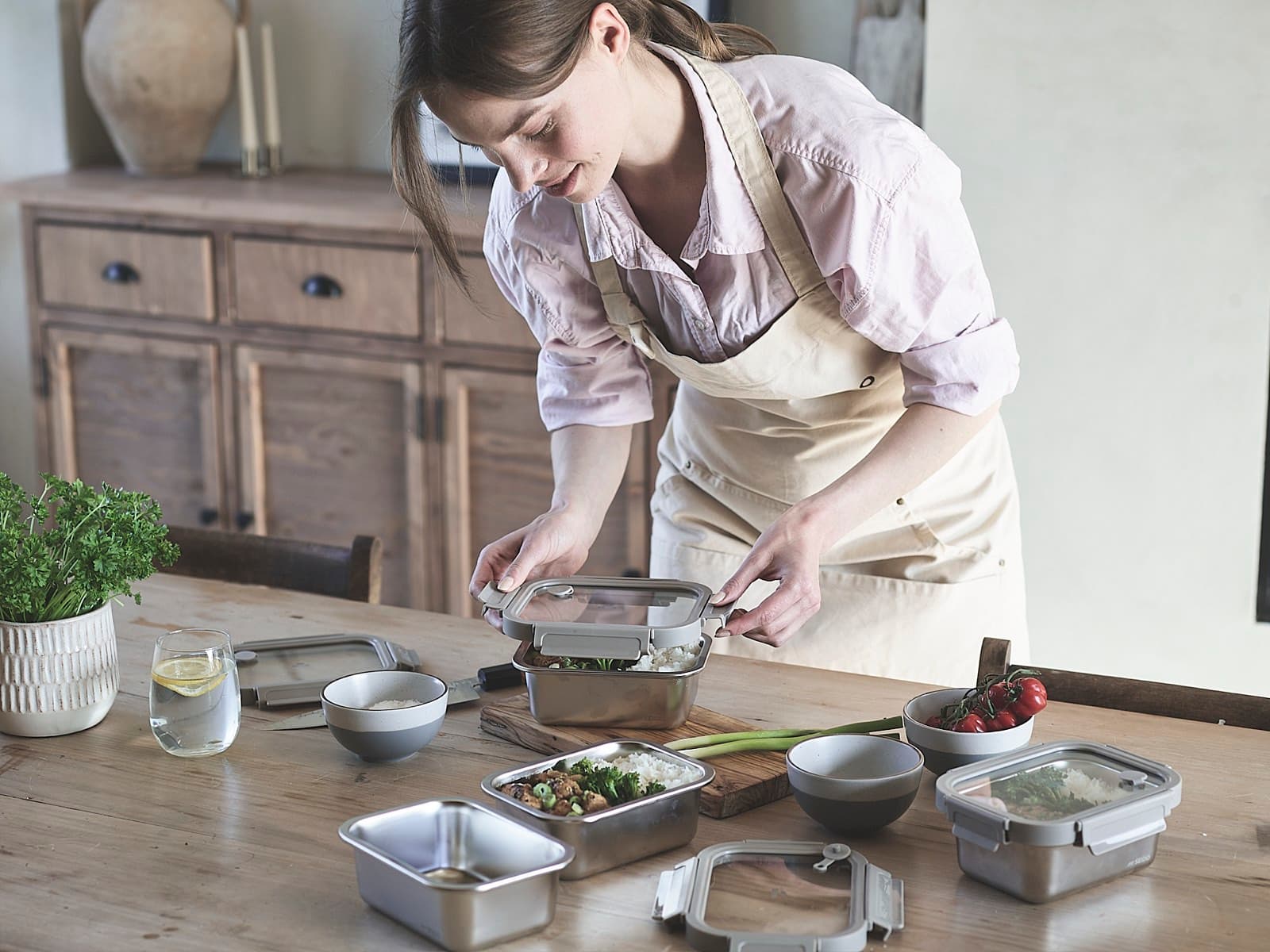
The best meal prep containers are the ones that fit how you reheat. Decide that first: microwave at work, oven at home, or eaten cold. Then check whether they can go in the freezer, then how they stack and carry. Plastic is light, glass shows what is inside, and stainless steel resists stains and does not shatter.
What makes a meal prep container good?
A good meal prep container is one you keep using in week six. Most sets fail on a single point, and it is usually the reheat. If lunch has to move to a plate before it can be warmed, the routine picks up a step and a second dish. That step is where habits break.
So choose in this order. First, the reheat method: a work microwave, a home oven, or no reheating at all. Second, the freezer: if you batch cook for more than a few days, some of the food will be frozen. Third, the practical details: whether the containers stack, how they ride in a bag, and whether each one holds a full meal.
Material decides most of these answers. Shape and lid design decide the rest.
Plastic, glass or stainless steel: how do meal prep containers compare?
Each material has a real strength and a real trade-off. None of them wins every category, so match the trade-off to your routine.
- Plastic: the lightest option and usually the least expensive. Many plastic containers are labeled for the microwave. The trade-offs are wear and staining. Tomato sauce and turmeric carry fat-soluble pigments that soak into the surface, and scratches from forks give oils and odors somewhere to settle. Heat can warp lids over time, and some plastics grow brittle when frozen.
- Glass: non-porous, so it does not hold stains or odors, and you can see the food inside. Glass is heavy in a bag and can break if dropped. Sudden temperature swings can crack it, so moving a dish straight from the freezer to a hot oven is risky unless the maker says otherwise. Glass containers usually pair with a plastic lid, which has its own heat limits.
- Stainless steel: non-porous, with a chromium oxide layer that resists corrosion and staining. It dents rather than shatters, and it stays light enough for daily carrying. The trade-off is the microwave; see below.
Which meal prep containers suit your routine?
The right set depends less on the food and more on the shape of your week. Three common routines ask different things of a container.
For a fuller work-and-gym setup, see our guide to meal prep containers for work.
- The 5-day office week: the microwave is the deciding factor. You need containers you can reheat in directly, a lid that closes firmly for the commute, and a surface that does not hold Monday's salmon into Tuesday. Three containers, refilled midweek, cover most weeks without cluttering a cabinet.
- The gym two-meal day: containers ride in a gym bag next to shoes and a water bottle, so durability matters more than looks. Plan for two containers per training day. Pack foods that travel well, such as rice bowls, pasta with a thick sauce, or chicken and roasted vegetables, and keep the bag upright.
- Batch-and-freeze: freezer use comes first. Choose containers the maker rates for the freezer, leave room at the top, and label every one. If you plan to reheat from frozen, check whether the container can go in the oven or microwave, and whether the lid can too. Those are often different answers.
What size meal prep container do you need?
For one adult meal, around 27 oz (800 ml) is a practical size. That is just under three and a half cups: enough for a grain base, a portion of protein and a serving of vegetables without packing the food down.
Go bigger if you eat one large meal in place of two, if you keep salad greens loose so they stay crisp, or if you want space to separate components inside one container. Go smaller for snacks and sides. A mixed set of sizes tends to get used less than a matched set, because matched containers stack neatly and share one lid size.
Are stainless steel containers good for meal prep?
Yes, for most routines. Stainless steel is non-porous, so oils and pigments rinse off and do not soak in. Its surface is protected by a thin chromium oxide layer that re-forms when scratched, which is why steel resists staining and corrosion through years of washing. It also takes knocks in a bag that would crack glass.
The one real limit is reheating. Metal reflects microwaves, and a steel container not designed for the microwave can heat food unevenly or spark at thin edges. That rule has exceptions only where the maker has designed a container for microwave use and tested it. Read the conditions that come with that rating, including power and whether the lid stays on.
Also check what the lid is made of. Many steel containers use glass, plastic or silicone lids, and the lid may carry different limits from the steel body.
What should you avoid when meal prepping?
Most meal prep problems come from a few avoidable habits.
- Warped lids: high heat is hard on plastic lid parts. Follow the maker's dishwasher guidance, and replace a lid once it no longer closes evenly.
- Microwaving with the lid sealed: steam builds pressure in a closed container and can push the lid off or splash food. Vent the lid or remove it, according to the container's instructions.
- Unlabeled freezer containers: frozen food looks alike after two weeks. Write the contents and the date on every container.
- Filling to the brim before freezing: water expands as it freezes, so leave headroom for soups, stews and sauces.
- Leaving hot food out to cool: USDA guidance is to refrigerate cooked food within 2 hours, or within 1 hour if the air temperature is above 90°F (32°C). Shallow portions cool faster than one deep pot.
- Prepping too far ahead: USDA guidance puts most cooked leftovers at 3 to 4 days in the refrigerator. Freeze what you will not eat by then.
Where does the SEIDO lunch box 3-pack fit?
The SEIDO Prep Series lunch box 3-pack is built for the office and gym routines above: three containers, 27 oz (800 ml) each, with a 304 (18/8) stainless steel body and a glass lid with a polypropylene frame and silicone gasket. The container is lab-tested for microwave use with the lid off, in microwaves up to 1000 W, and never empty. The container, tested without its lid, is lab-tested for freezer use and dishwasher safe, handwash recommended. It is also lab-tested for oven use as a container only; the lid never goes in an oven. It is backed by a 5-Year Limited Warranty. A larger 40 oz (1.2 L) set is in development; join the waitlist at /stainless-steel-lunch-boxes/40-oz. If it fits your week, see price on Amazon, and for recipes and routines, start at the SEIDO meal prep hub.
Cooking this way is what our stainless steel lunch box 3-pack is built for — 27 oz (800 ml) × 3, microwave-safe, dishwasher safe, 5-year limited warranty.
Frequently asked questions
- Are glass or stainless steel meal prep containers better?
- It depends on how you carry and reheat. Glass lets you see the food and is commonly labeled microwave-safe, but it is heavy and can break when dropped. Stainless steel is lighter, dents rather than shatters, and resists stains and odors, but check it is rated for your microwave.
- Can you freeze meal prep in stainless steel containers?
- Yes. Austenitic stainless steels such as 304 (18/8) stay tough at home freezer temperatures, and a non-porous steel surface does not absorb odors from frozen food. Leave headroom for liquids, because water expands as it freezes, and label each container with its contents and date. Check the lid separately, since lid materials can carry different limits from the steel body.
- How long does meal prep last in the refrigerator?
- USDA guidance puts most cooked leftovers at 3 to 4 days in the refrigerator. Refrigerate cooked food within 2 hours, and portion it into shallow containers so it cools quickly. For a five-day plan, refrigerate the first few days of meals and freeze the rest, then move them to the refrigerator to thaw as the week goes on.
- Can you microwave stainless steel meal prep containers?
- Only when the maker has designed the container for microwave use and tested it. Metal reflects microwaves, so ordinary steel containers heat food unevenly and can spark at thin edges. SEIDO's lunch box container is lab-tested for microwave use with the lid off, up to 1000 W, and should never go in empty.
- How many meal prep containers do you need?
- For one lunch a day, three containers cover Monday to Wednesday from one weekend cook, and a quick midweek refill covers Thursday and Friday. For two prepared meals a day, plan on two containers for each day you cook ahead, so six covers three days. A matched set stacks better and shares a single lid size.
Browse all stainless steel lunch boxes.